


Presenting partner: Viktor
Viktor is an AI employee that lives in Slack and Microsoft Teams. Connects to 3,200+ tools. Does the work, not just answers questions. Hire Viktor for your team.

GTM partners:

Ahrefs Brand Radar - Make AI recommend your brand.
Attio - The agentic CRM built for modern GTM teams.
Clay - Build systems to grow revenue.
Hyperagent - Agents that ship real, powerful work. Sign up for a paid account and receive $100 in credits.
Miro - The collaborative workspace where GTM teams and agents converge to build together.
Dear GTM Strategist,
Grok Bot is here, and it is the most interesting piece of technology I have tested this year.
I was in the private beta in August, before any of this hit your feed. By now, the bots are wired into the live parts of our GTM stack, including our hero setup (Granola + Clay + Attio), and the best part is they run after you shut down the laptop for the day.
This month, the SpaceXAI team is launching like crazy, and the whole world is watching. Their “open company building” this week was a masterclass on its own: SpaceXAI and Grok Bot are dominating social feeds with practically no paid budget (building in public).
The launch video for Grok Bot had more than 55 million views (!) and millions wathced the live building sessions this week. If you study only one launch this quarter, I’d choose this one.
The bots themselves are unlike anything we have tested before: extremely intuitive, easy to pick up, and so horizontal that our imagination went wild. Here is what I actually use them for today:
Account research
Curating news for our content calendar
RevOps grunt work
Sourcing new real estate investment opportunities
In this edition, I want to take you into the nitty-gritty of it:
The launch playbook behind Grok Bot, and why it is dominating feeds with almost no spend
Curated GTM (marketing and revops) bot examples
Our internal Grok bot stack, the one we run at Growth Lab today
I hope you squeeze as much value out of it as we have, get many useful templates for instant runs, and get plenty of new inspiration for your next builds and launches.
Ladies, gentlemen, and nerds of all AI religions: Let’s Grok!
What is Grok Bot - and why does it matter for GTM
Grok Bot is a product that took the GTM and AI space by storm. It was launched a month ago. I was happy to be one of the beta testers, and it really means a next step in how we use AI.
I like to compare it with open-source systems like OpenClaw and Hermes, but they require just too much technical setup for an average user, while Grok Bot is just easy to use. They even simplified some parts of the interface that are still quite geeky in other general AI tools - but more on that later.
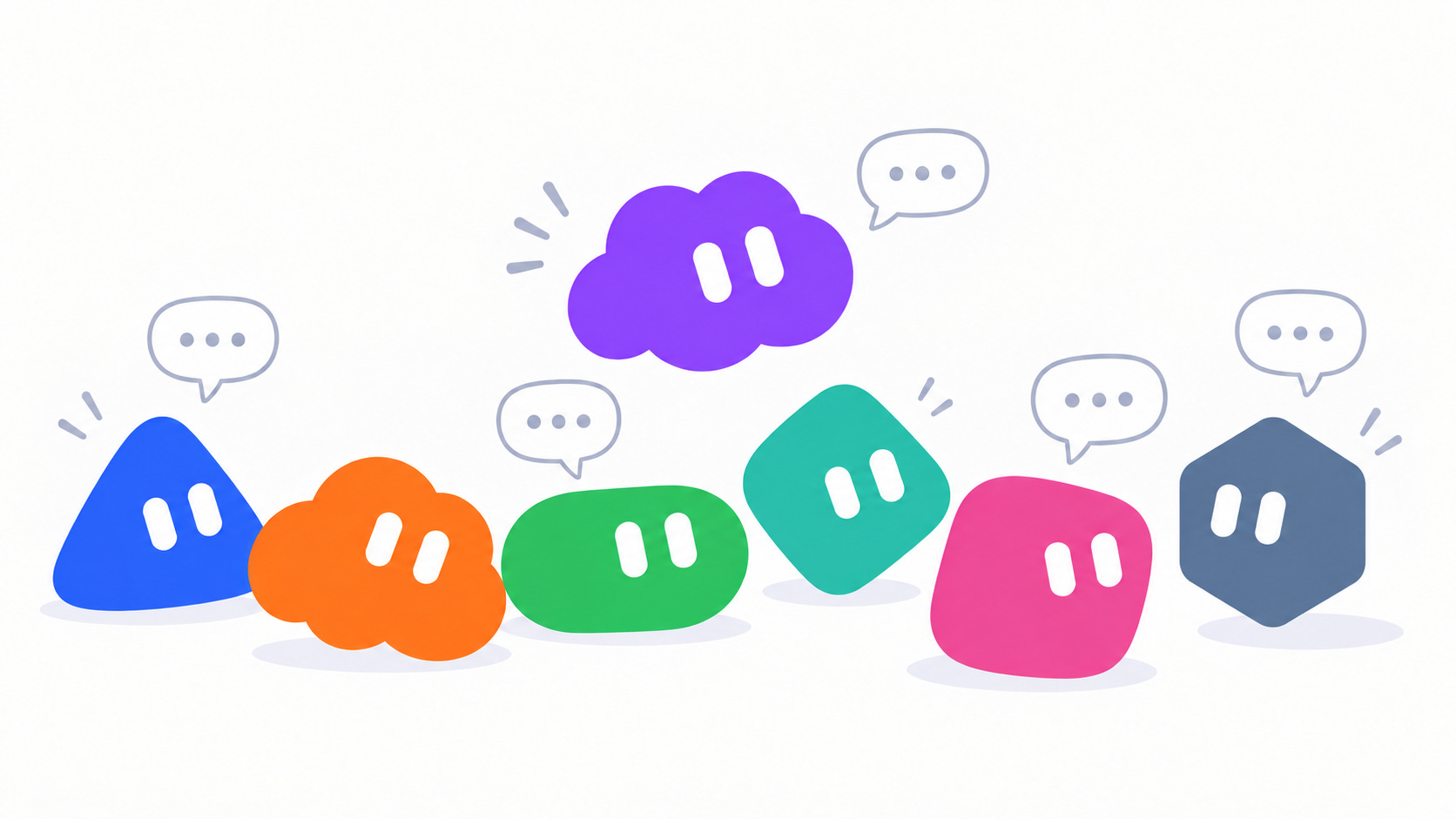
But let’s meet the bot and what its key features are:
It’s always on. Unlike other AI agents, it sets up the routines that run without you needing to keep your computer running.
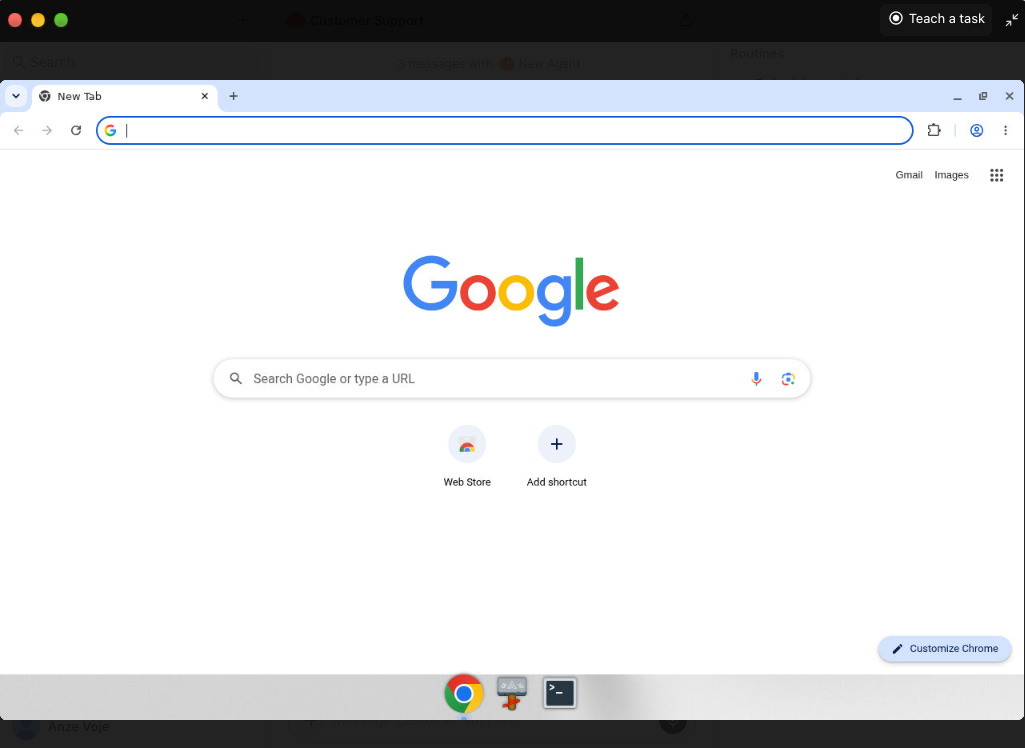
It runs a virtual computer. That’s the key difference from Claude/ChatGPT, and what makes it similar to OpenClaw. But in OpenClaw you had to set up an additional computer (most commonly a Mac Mini) yourself, while Grok Bot just spins up a virtual Linux cloud computer with a browser and filesystem where you log in to your apps.
It has shared memory. It builds the context from all the conversations and gets sharper over time, so you don’t have to start every chat with a clean context.
It connects beyond MCP and API. You can take over the virtual computer, log into the websites and apps you use, and let the bots work there.
It’s very visual. If you need to teach it a repetitive task, you just record your screen.
It works across devices. Continue the work between desktop and your phone.
It’s a fleet of bots. One of the most magical features is how bots collaborate. The best use case is to create bots as specialists with clear jobs. They run in parallel and you can message every bot like you would message a co-worker.
In a nutshell: Grok Bot brings many out-of-the-box features that had to be specially engineered before. Building context for your work in Claude Code requires lots of manual work and folder structuring.
Best practices for GTM
Grok Bot is great for personal productivity, but it also opens tons of great GTM use cases. The concept is similar: you connect it with your apps and explain (or show) it the workflows; it can do lots of heavy lifting for you.
Connect your tools. You can use connectors in a similar way as you are used to with Claude or ChatGPT.
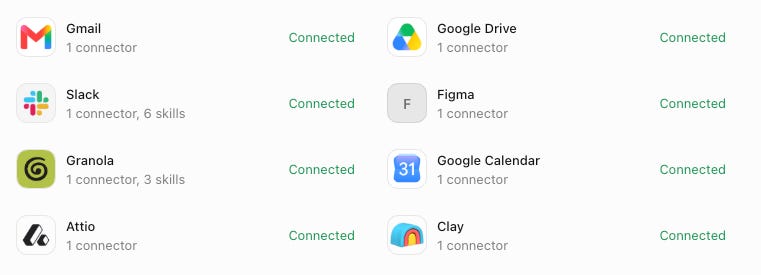
If some tool doesn’t have a connector, just use the virtual machine to log in. For example, I logged my Grok Bot into Booking.com, and it shortlists the best places for my trips - saving me lots of time and tab-hopping and FOMO from not checking the website daily myself to find our dream vacation house in Thailand.
Here are some other best practices I have set up:
Account Research
This bot has a detailed prompt that researches opportunities that land in my inbox.
The key part is the signal: Grok Bot has access to my inbox, so it will automatically run the research when I get a new collab inquiry. If there is a very hot opportunity, it will ping me to react fast and already propose an action - so I don’t need to monitor my inbox all the time.
So at the right signal, I get a full briefing and background, including the proposed action (like the suggested reply or offer).
If your work is mostly on outbound, you can set up a similar routine based on signals that are relevant to you. It can check Clay to find the best contacts, update your CRM, and send you updates to Slack when needed.
Competition Monitor
I created a bot that constantly monitors some websites and alerts me only when there are major pricing or offering changes.
I created it with a simple prompt:
Set up a competition monitoring agent that will daily check the websites of competitors that I will mention and only let me know if you observe pricing changes, new offerings, and so on.
AEO Monitor
An AEO bot that continually runs routines for maximizing your mentions in AI tools.
Give it a daily routine to connect it with an AEO data provider (like Ahrefs Brand Radar) and run daily checks of the top prompts your buyers. It should monitor your position across ChatGPT, Gemini, Perplexity, and Google AI Overview and tell you if anything changes.
It can proactively suggest improvements for your website and new topics, or even write the title changes and just ask for your approval.
Outbound Prospecting
I also asked Krista Letz, who runs GTM for SpaceXAI, about her best use cases and tips for Grok Bot, and she shared this outbound prospecting template with me.
This bot builds a prospecting plan, does deep research, and will actually watch webinars and listen to podcasts on your behalf, so your messaging is personalized. Then it drafts email and LinkedIn notes in your voice, and you review the drafts in the morning.
Commitment Tracker
A commitment-tracking bot can watch your Slack and email for promises you made or what others owe you, log them, and track them until they are delivered.
For more, the SpaceXAI team has now launched a marketplace where you can get the templates and playbooks for your bots. You just copy it like a prompt and it will create a new bot (and ask you some questions/permissions if needed).
Fair advice: Grok Bot is new and still in beta, so not every connection or integration will work smoothly yet. From time to time, you might run into something that needs another approach, but these are the proven cases.
How to manage the bots
Good news: you can create a bot to manage the bots! The name that best fits it is Chief of Staff. It will coordinate the bots for you, autonomously fix what’s needed, and only get back to you for key decisions. It can run morning or evening standard routines, collect status, and only escalate when it needs a human yes or no.
Here are the best practices for your bot fleet:
One bot = one stable job. Narrow, specialized jobs work better than “general helpers”. Each bot should have its clear goal, resources, approval line, or schedule.
Keep the conversation flowing. Each bot has its own conversation, so it builds the memory and routines. Meanwhile, tools, skills, and cloud computer are shared between the bots. So you only log in to tools once (if needed - if no official connector exists), and all the bots can access them. This means that tasks can be passed between bots.
Bots can DM each other. For example, a signal from one bot can nudge another one to start the workflow. You can even create a group chat with up to 6 bots.
Here’s an example of how I briefed two content-related bots to hand tasks between each other:
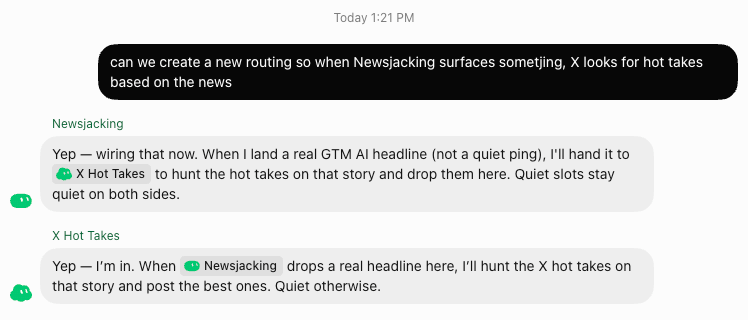
Another example is to create a Token Officer bot. Instruct it to watch how the other bots burn tokens and optimize their work.
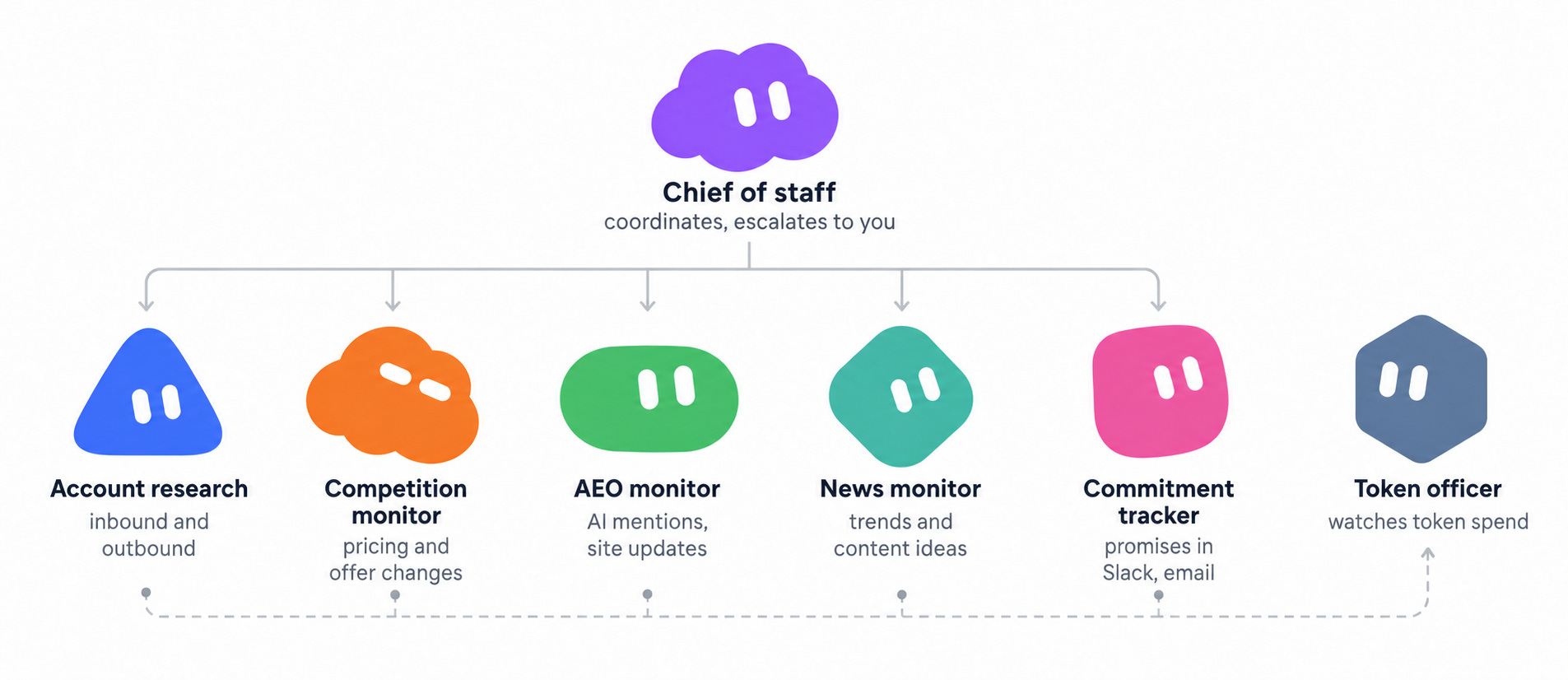
Some other best practices:
Always try the official connector/MCPs first. If they don’t exist or are too limiting, you can log into almost any app via Grok Bot’s virtual computer.
Scope every specialist bot narrowly - scale it later.
Be specific with prompts - every goal should have a clear goal. Think of the process, not a one-time job.
If you have your skills already set up in Claude, you can just copy/paste them and the bots will learn from them.
A masterclass in product launch
Apart from Grok Bot just being an awesome product, I also admire how the team approached both product building and the product launch. Roman Ugarte recently shared the story on Lenny’s Podcast. What stayed with me most:
Relentless customer focus. The team personally onboarded almost 300 beta customers and checked in on their usage and feedback while building the product (full disclosure: I was also in the program). They didn’t go just for tech/pro users and early adopters, but also onboarded a diverse set of mainstream users they want to go for, like someone who runs a coffee shop. This brought real-life insights.
Design choices. To be customer-focused, the team made a conscious decision to strip out many of the add-ons that became persistent in AI tools. You know what I mean:
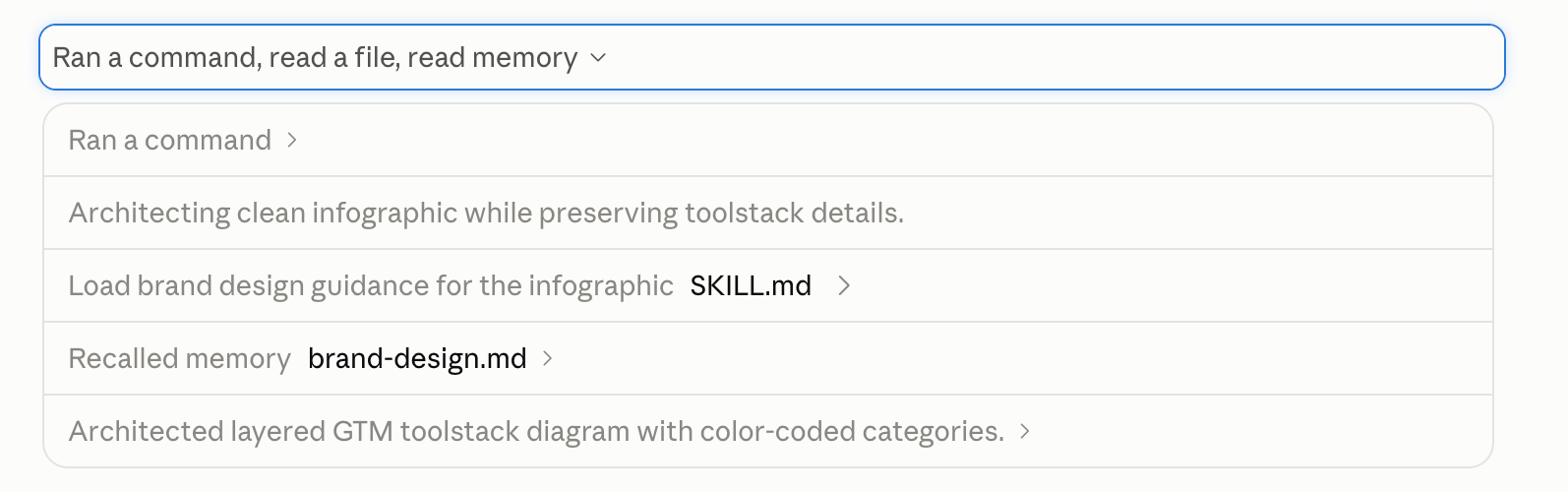
To appeal to a mass audience, maybe not everyone needs to know which skills were loaded and which functions were called. Grok Bot just works and doesn’t bore you with the details of what runs in the background.
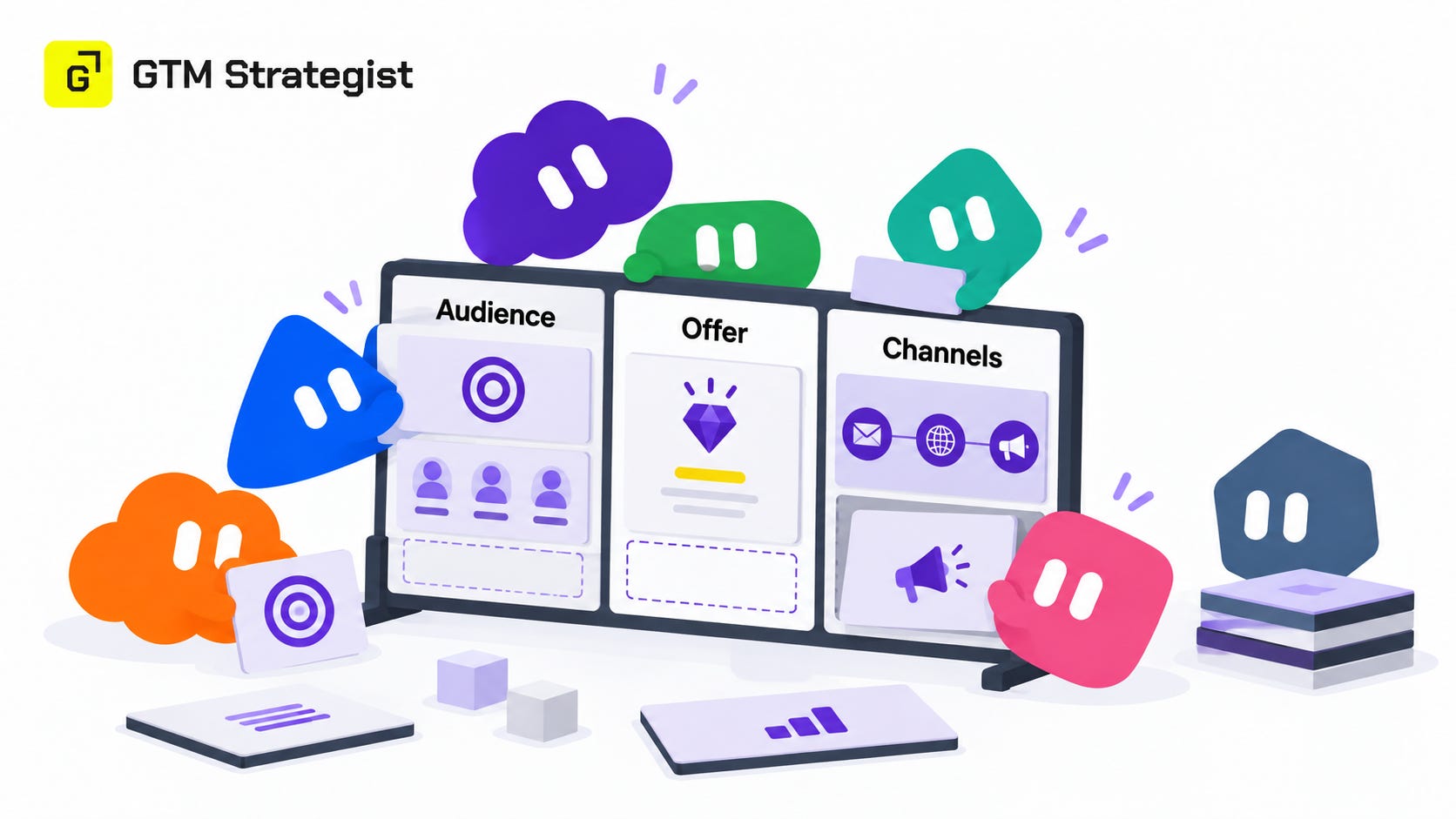
Grok Bot is not just hype. It’s how GTM tools evolve and enable us to do more.
It’s amazing to see the workflows that were created in the first month. We’re still early, so I’m excited to see what’s next. Share your favorite workflows with me!

✅ Need ready-to-use GTM assets and AI prompts? Get the 100-Step GTM Checklist with proven website templates, sales decks, landing pages, outbound sequences, LinkedIn post frameworks, email sequences, and 20+ workshops you can immediately run with your team.
📘 New to GTM? Learn fundamentals. Get my best-selling GTM Strategist book that helped 9,500+ companies to go to market with confidence - frameworks and online course included.
📈 My latest course: AI-Powered LinkedIn Growth System teaches the exact system I use to generate 7M+ impressions a year and 70% of my B2B pipeline.
🏅 Are you in charge of GTM and responsible for leading others? Grab the GTM Masterclass (6 hours of training, end-to-end GTM explained on examples, guided workshops) to get your team up and running in no time.
🤝 Want to work together? ⏩ Check out the options and let me know how we can join forces.