



Presenting partner: Viktor
Viktor is an AI employee that lives in Slack and Microsoft Teams. Connects to 3,200+ tools. Does the work, not just answers questions. Hire Viktor for your team.

GTM partners:

Ahrefs Brand Radar - Make AI recommend your brand.
Clay - Build systems to grow revenue.
FullEnrich - 80+% find rate for emails and phone numbers.
HubSpot for Startups - The GTM engine that grows with you. See if you qualify for 90% off.
Miro - The collaborative workspace where GTM teams and agents converge to build together.
Ploy - The marketing platform that turns your website into a growth engine.
Primer - Target your ICP across LinkedIn, Meta, Google, Reddit, and more.
Dear GTM Strategist!
50% of go-to-market pros will increase their AEO (answer engine optimization) budget in 2027 (source) - with the goal of getting their product recommended by ChatGPT, Claude, or Google AI Mode.
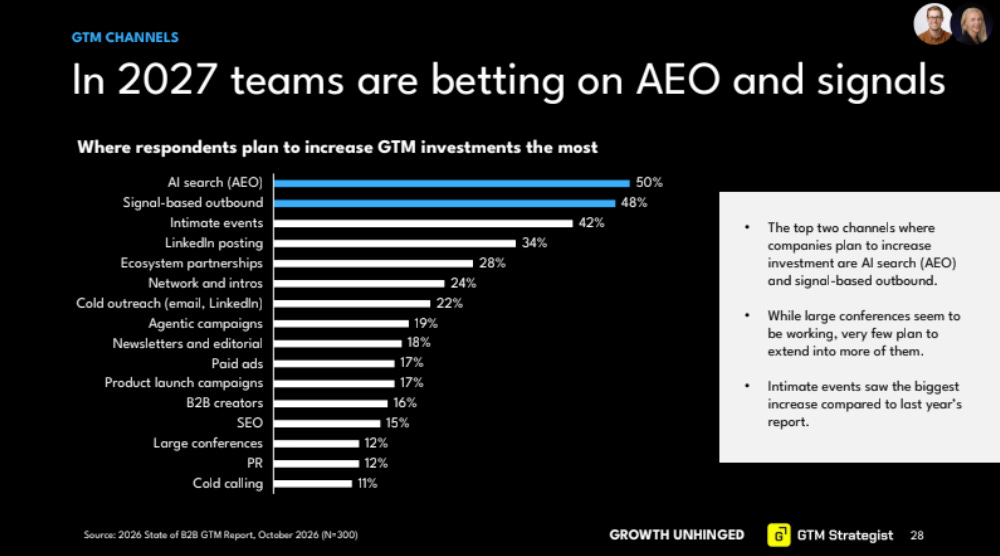
If you are still “waiting for more time, resources, and bandwidth” to give it a shot, let me put your mind and heart at ease first.
AEO is about 18 months old. We are very early, and you’re definitely not too late to start now.
But do start because 51% of B2B software buyers now start their research with AI, not Google. The change is real. Whether you’re a small startup or an enterprise, you need an AI discoverability strategy. And if you are good at multichannel marketing, you might be closer to it than you think …
In this piece, I teamed up with Josh Grant, who knows this firsthand. As VP of Growth at Webflow, he owned incremental ARR and the full channel mix. LLM traffic converted better than any other source: ~6x better than non-brand Google search (24% vs. 4%). LLM-attributed customers also grew ~8x year over year.
So he doubled down, then launched StackedGTM to help others unlock this channel’s full power.
In this article, you’ll learn:
The 85/13 split: why AEO is won offsite
Why most AEO budgets are wasted on content that sits on your own website
A step-by-step AEO use case: the offsite playbook
The secret weapon: creators, the underpriced asset in AEO
How to measure AEO beyond vanity metrics
Let’s sharpen our AEO muscle 💪 for 2027 and build an AEO tiger team - roar! 🐯
SPONSORED
Your sales team closed the deal. Who owns what happens next?
Pebl ($150M ARR) merged Ops and GTM into one team built around the full customer lifecycle. Average monthly churn is down 25%.
Dutta Satadip, Pebl’s Chief Business Officer, shows how they made the shift in a live 30-minute session with HubSpot for Startups on November 19.
You’ll also learn:
→ How Pebl uses AI across the customer lifecycle
→ The GTM tech stack behind prospecting, pipeline, onboarding handoff and customer success

Only 13% of AEO action happens on your domain
Here is how LLMs think: “My job is to give the simplest, most likely correct answer to the question asked. To get there, I’ll pull from sources on and off your website, predominantly off.”
To influence the answer, you need to know where the engines source from, and those sources keep moving. Josh pointed me to research by AirOps (2026 State of AI Search): only about 13% of AEO is influenced by onsite optimization (FAQ page optimization, mapping H1 titles to real buying questions, schema markup, and regularly refreshing high-value pages). The rest happens on pages you don’t own.
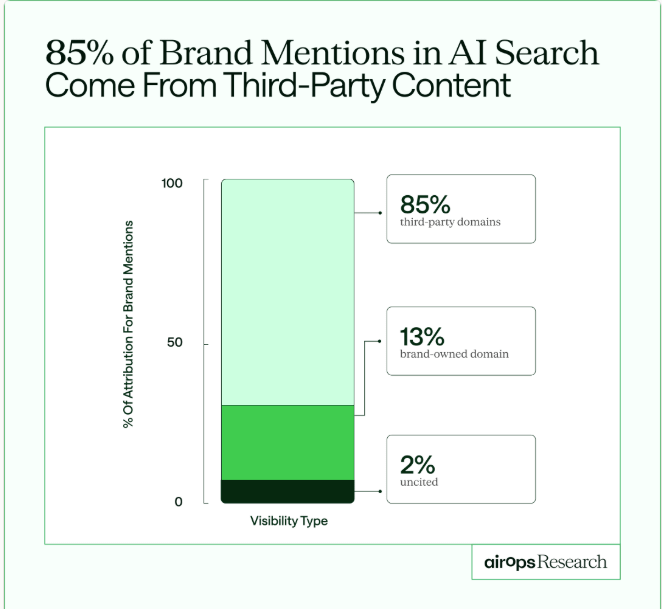
And for most AEO and SEO folks, that is the “less sexy” work of chasing citations on third-party sites, YouTube, creator content, and communities. What sites actually get indexed?
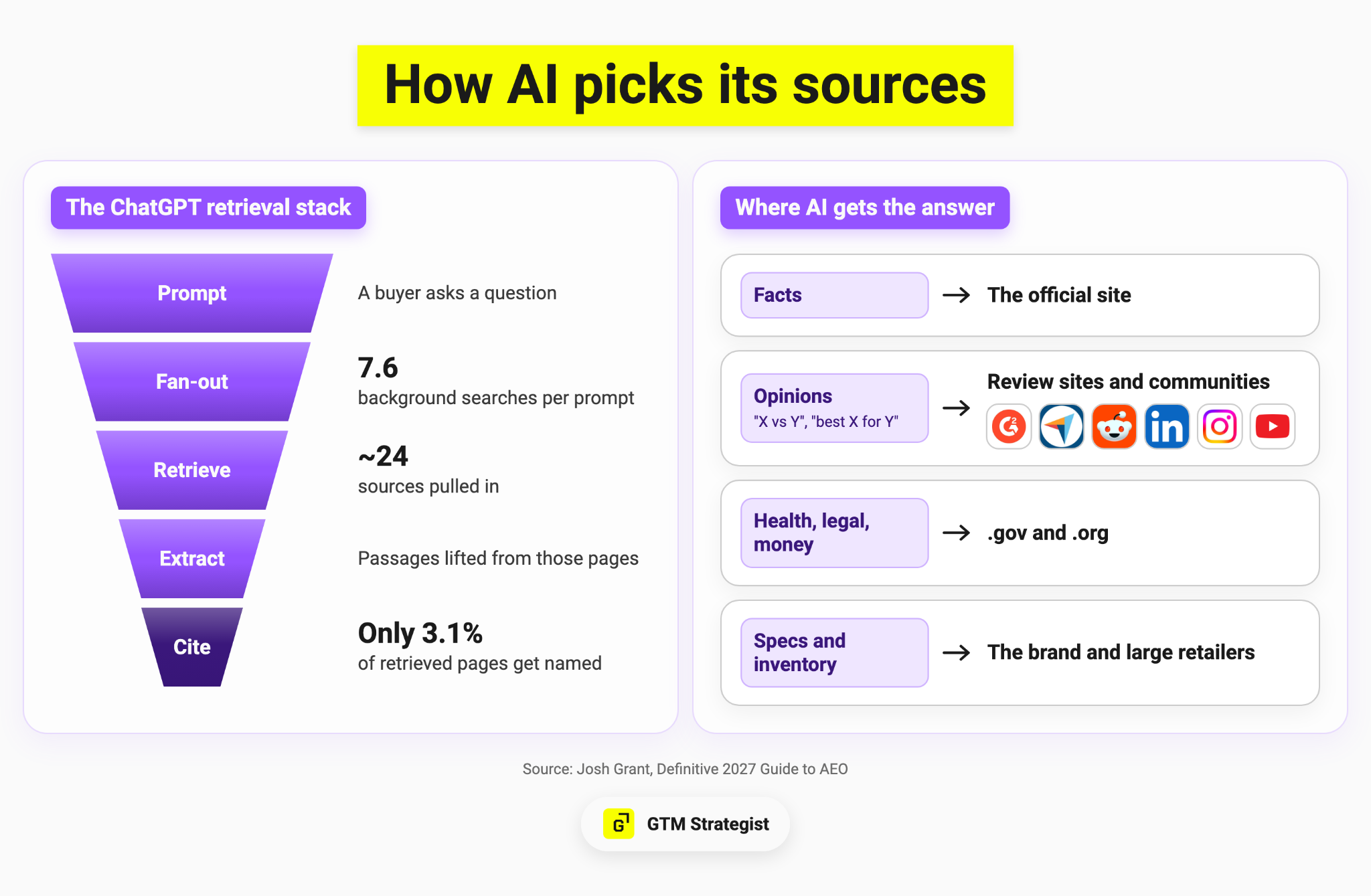
Get the full data in Josh’s Definitive 2027 Guide to AEO
Yet most companies end up paying $20K-$50K a month to an agency or consultant that runs on this blueprint: “find the prompts people search, write content about them, publish it on the client’s site, repeat.” And now they’re looking back and seeing no pipeline from it.
Josh put it simply: “If you win offsite citations in a big way, you win AEO. An AEO content roadmap that’s just a bunch of content sitting on your blog is not optimizing for AEO. Get other people talking about you.”
But that sounds like a lot of marketing, outreach, and PR work - so who exactly should own AEO?
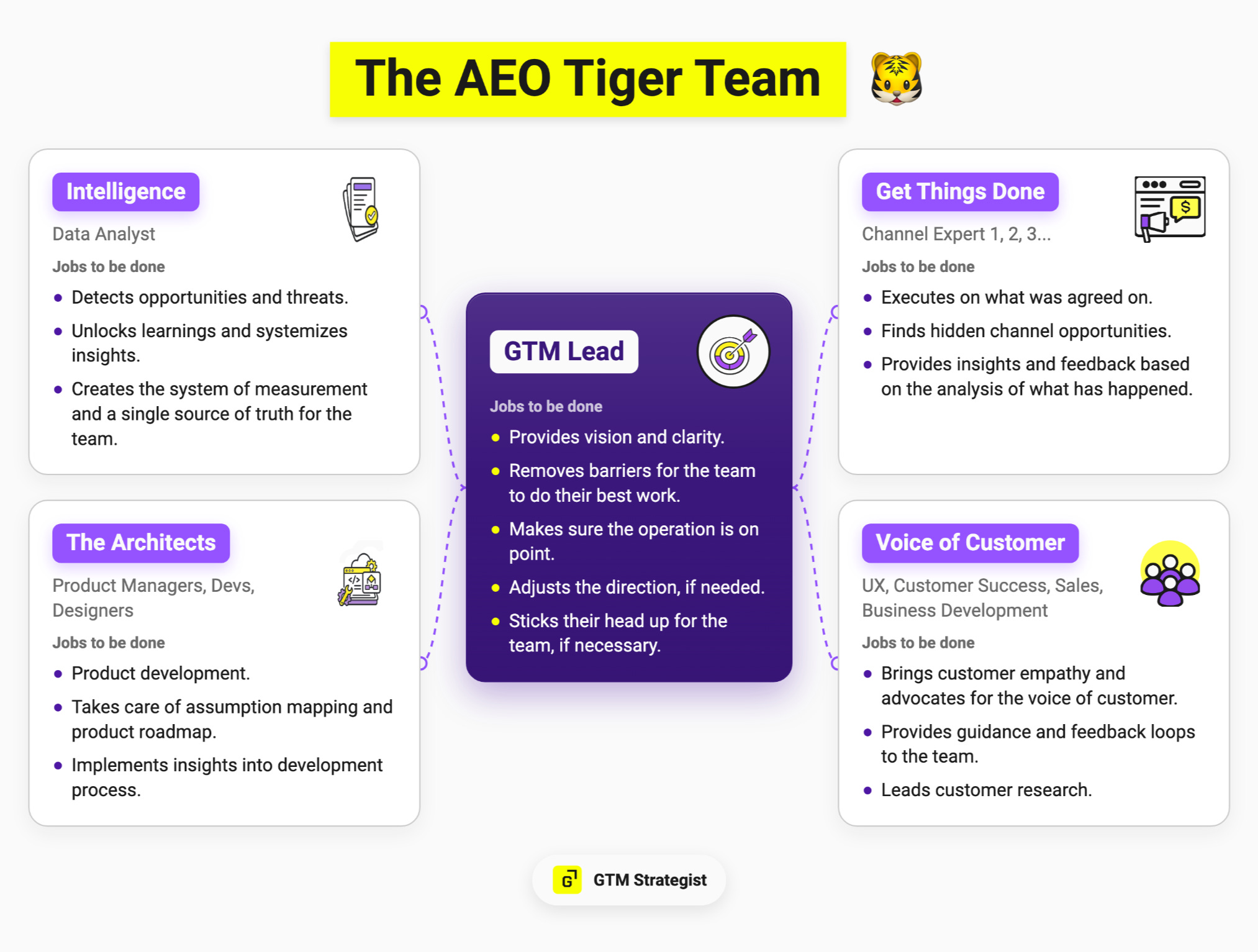
The AEO tiger team 🐯
“Where does AEO live?” is one of the most common questions Josh gets. In dozens of conversations, he sees the same pattern: the CEO and the board put pressure on marketing, and the CMO hands AEO to the SEO lead. That person now owns a problem with very few levers.
Josh believes that the emerging organic marketing leader role will need to understand both traditional search performance (SEO) and how AI systems form recommendations (AEO), with the ability to coordinate the teams that influence those outcomes.
But now that you know most AEO happens offsite, the best AEO efforts are multichannel marketing efforts:
A creator program and social media team (fun fact - even LinkedIn posts get AEO indexed)
A website team focused on conversion
PR that influences third-party mentions
Product marketing that owns positioning and messaging keeps what’s said about you consistent
The orgs getting AEO right treat it as a commercial discovery problem that crosses organic growth, product marketing, PR, creator partnerships, and web infrastructure. Someone needs to own the outcome, but no single function controls every input.
That’s why the SEO people who succeed become project managers of an AEO tiger team 🐯, pulling in at least one person from each discipline. Those who try to own it alone return to onsite optimization and, in Josh’s words, “die on the vine.”
For smaller teams: agentic AEO
For smaller teams, it is probably you and your agents that can do lots of the heavy lifting (a playbook in this article is for you ♥️) … and some content creators that boost trust in your brand as well as AEO efforts (more on that in the next section).
Josh suggests starting with three agents:
Question Mining Agent: Pulls real buying questions from sales calls, reviews, support tickets, Reddit, etc., and prioritizes them based on commercial intent.
Citation Gap Agent: Tracks those questions across ChatGPT, Google AI Mode, etc., figures out which competitors are getting recommended, and identifies the third-party sources influencing those answers.
Wrong Story Agent: Monitors what AI engines are saying about your company and flags outdated pricing, incorrect product information, positioning issues, etc.
“I’m also starting to build out offsite negotiation agents, which is where things get really interesting,” says Josh.
Believe it or not, you can already do a lot of this with Instinct. “I’ll give Instinct a list of high-value pages cited in AI answers, plus context on the client and competitors. It researches the contacts, emails them, handles the back-and-forth and even negotiates placement terms. I just approve the spend.” Here’s more on that.
Getting included on some random listicle means nothing if it doesn’t influence the buying questions you care about.
Agencies can be wildly helpful too, especially for smaller teams, but choose VERY carefully. Plenty of them sell traditional SEO with an AEO label slapped on it. Josh’s test: “Ask them to walk through how they find buying questions, identify offsite opportunities, actually secure placements, and measure whether any of that improves recommendations and ultimately revenue.” If the answer is basically “we’ll publish optimized blog posts and track your AI visibility,” keep looking.
You can automate a surprising amount of AEO work now. Knowing what work is actually worth doing is still the hard part.
B2B creators are the most underpriced asset in AEO
In one study of 3,900 CPG/auto videos, ~60% of the videos AI engines cited were from creators vs. ~10% from brands. A similar trend happens on LinkedIn:
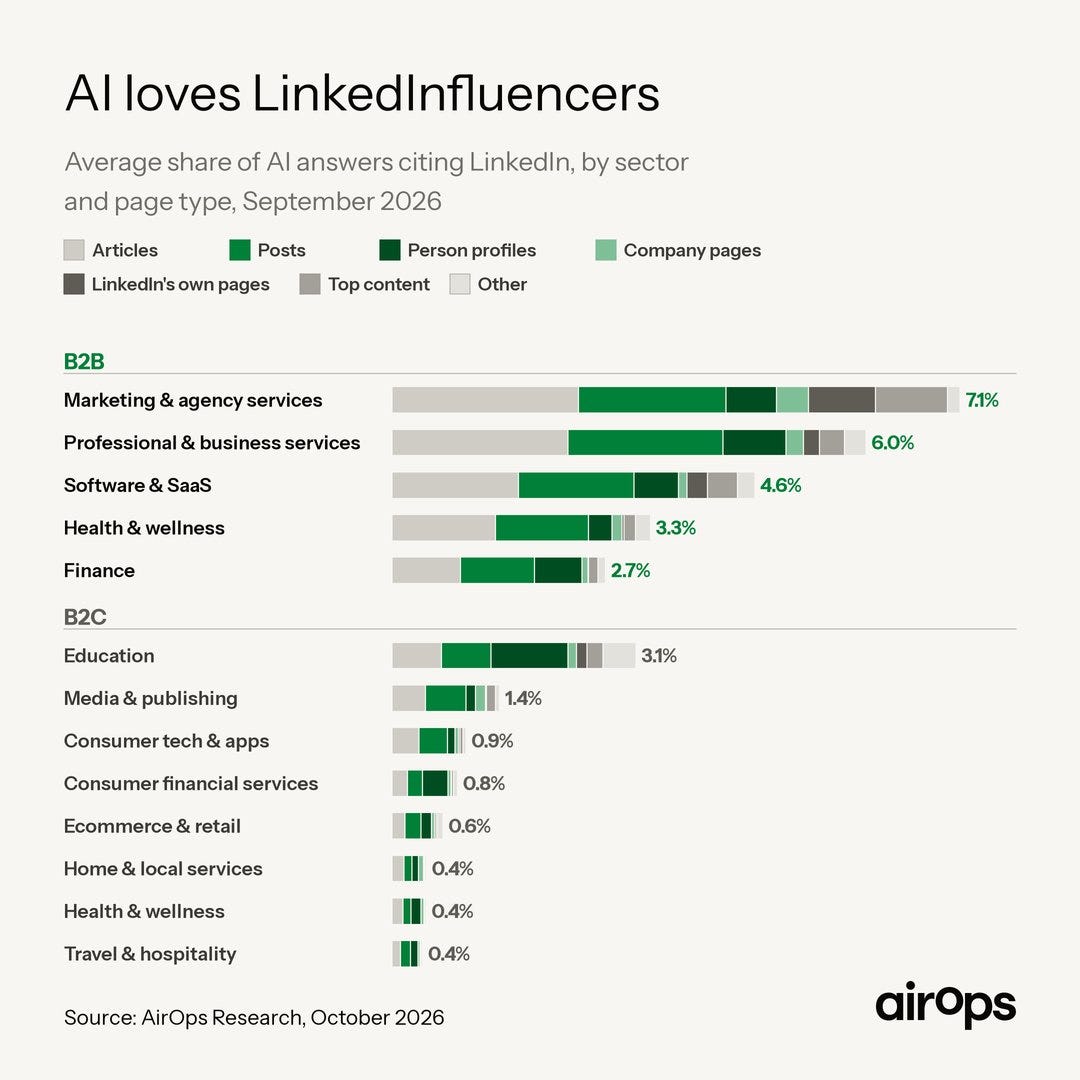
Josh explained: “When you work with a creator, you get two things at once: their audience, and offsite influence in the LLM. If Lenny’s Podcast talks about your tool, his content is often cited when LLMs answer questions about your category.”
Catch: Lenny is famously picky. So how do the rest of us get some creator juice 🧃 into our AEO? Start by killing the CPM mindset. A creator collab isn’t a media buy priced per thousand impressions. You’re paying for trust that compounds every time an LLM cites the post. Most brands (and plenty of creators) still price it like a banner ad.
How to do it better?
Josh shared three simple guidelines on how to unlock the full AEO potential of your creators’ collabs.
1) Pick creators by their influence on buying decisions, not follower count
Most brands pick “safe” creators with 100-400K followers, but audience size doesn’t directly correlate with who gets cited. Do your own research: run your buying prompts in a tool like Profound, AirOps or Ahrefs Brand Radar, or do your own offsite citation analysis, and see which creators show up.
But citation frequency alone isn’t the whole picture. Check whether a creator’s content consistently surfaces for the specific buying questions you care about. A creator who influences answers about enterprise security, integrations or competitive alternatives can be far more valuable than someone cited often for broad industry commentary.
Often, you’ll be surprised: some of the best-cited voices are operators learning in public, with smaller audiences but a disciplined focus on one topic. Bigger creators can still have a big impact, but diversify part of your budget into smaller creators and see what happens.
The opportunity isn’t just creator reach. It’s creator influence at the moment someone is deciding what to buy.
2) Brief for themes, not keywords
Revise your collaboration briefs for AEO impact. Keep a few core themes consistent across all your creators, and then let them speak in their own voice. Their voice is why they’re cited in the first place. Don’t make them recite scripts or publish posts that are not in their voice.
3) Don’t forget your own team
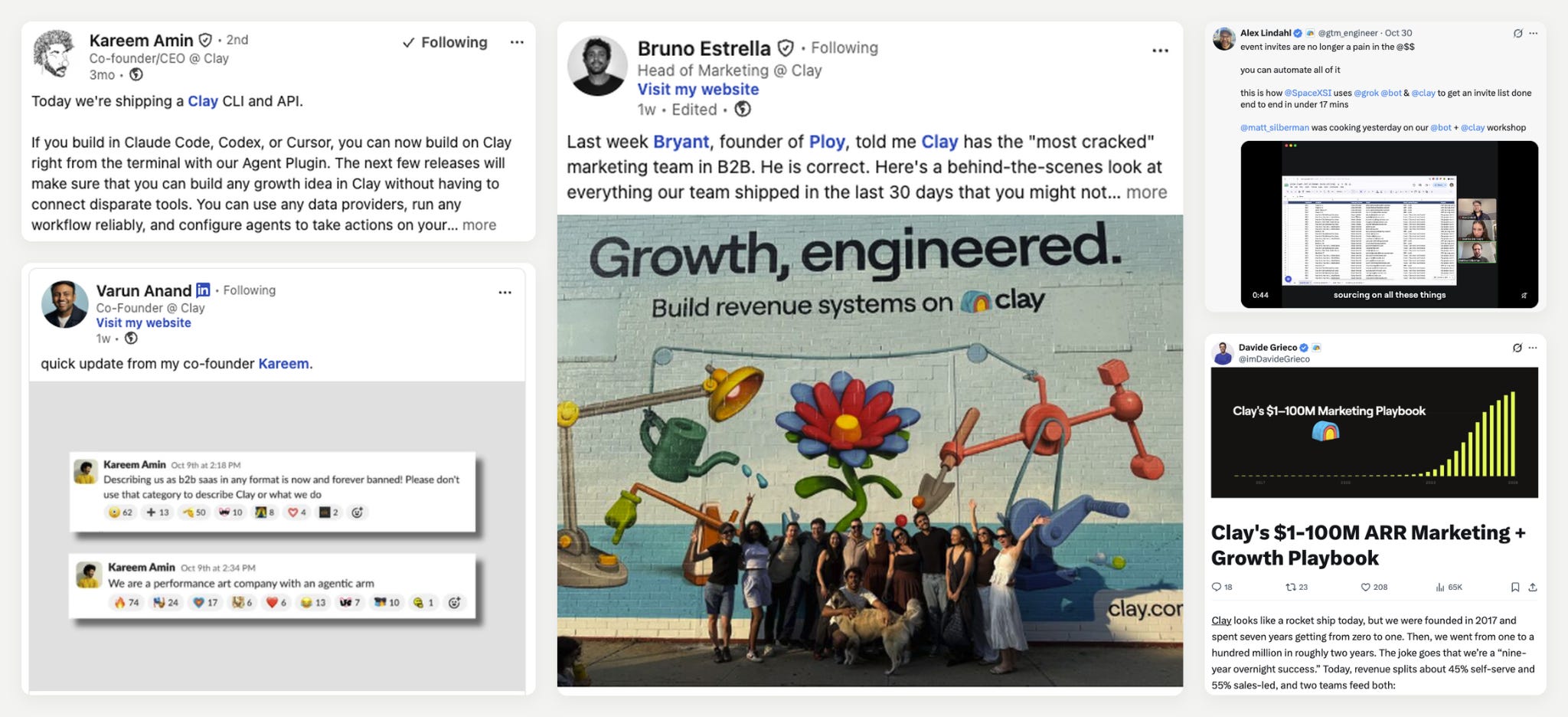
Your employees are creators too. When Clay, Lovable and Profound ship something, the whole company talks about it, and the engagement snowballs. Pair that with something actually worth talking about (a sharp launch video, a bold point of view), and you create the digital word of mouth that LLMs pick up.
Now, let’s get actionable:
I challenged Josh to walk us through the exact steps he’d take to index an AI SDR (I chose this example because building trust and differentiation in the space is hard, and the space is getting cluttered) - here is what he’d do:
How to win offsite AEO in 5 steps
Let’s say I just launched a fairly ordinary AI GTM tool, an AI SDR. Nothing super special in version one, if we’re being honest. How would he get agentic engines to recommend it?
The good news first: with SEO, a new player waited ages to show up while building domain authority. With AEO, Josh sees visibility gains in four to six weeks when you win high-value offsite citations. This levels the playing field for smaller, bolder, “hackier” brands
Here’s the playbook, step by step.
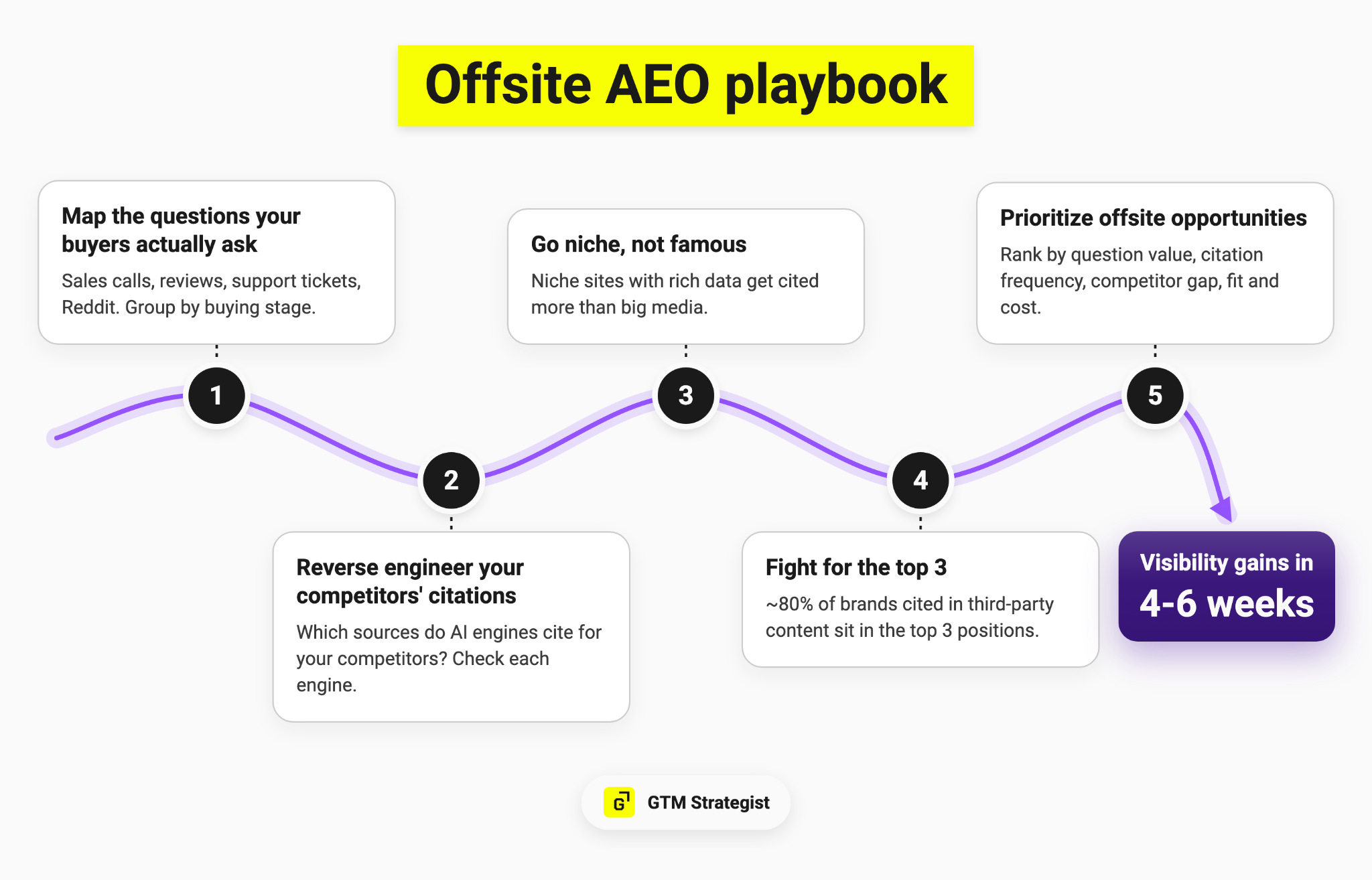
Step 1: Map the questions your buyers actually ask
Before any content gets created, Josh starts with a process he calls question mining: identifying the actual questions buyers ask when researching, comparing and selecting products.
The best inputs are sales calls, customer interviews, lost-deal notes, support tickets and reviews. He then uses agents to expand that research across relevant communities, review platforms and competitive discussions like G2, Reddit, Capterra, Product Hunt, and Trustpilot
From there, he groups questions by buying stage and commercial importance. Crucially, he separates branded questions from non-branded discovery prompts, where buyers haven’t already decided which companies to consider.
Step 2: Reverse engineer your competitors’ citations
Run your buying prompts through a visibility tool like Ahrefs Brand Radar, Profound, or AirOps (or build your own agent, as Josh sometimes does) and see where your competitors’ citations come from.
But don’t stop at citation sources. Track which competitors are actually recommended, how they’re positioned and which product claims repeatedly influence the answers. Run that analysis separately across the AI systems your buyers use. A competitor dominating ChatGPT recommendations won’t necessarily have the same position in Google AI Mode or Perplexity.
The output: a prioritized set of recommendation gaps, source opportunities and inaccurate narratives to correct.
Step 3: Go niche, not famous
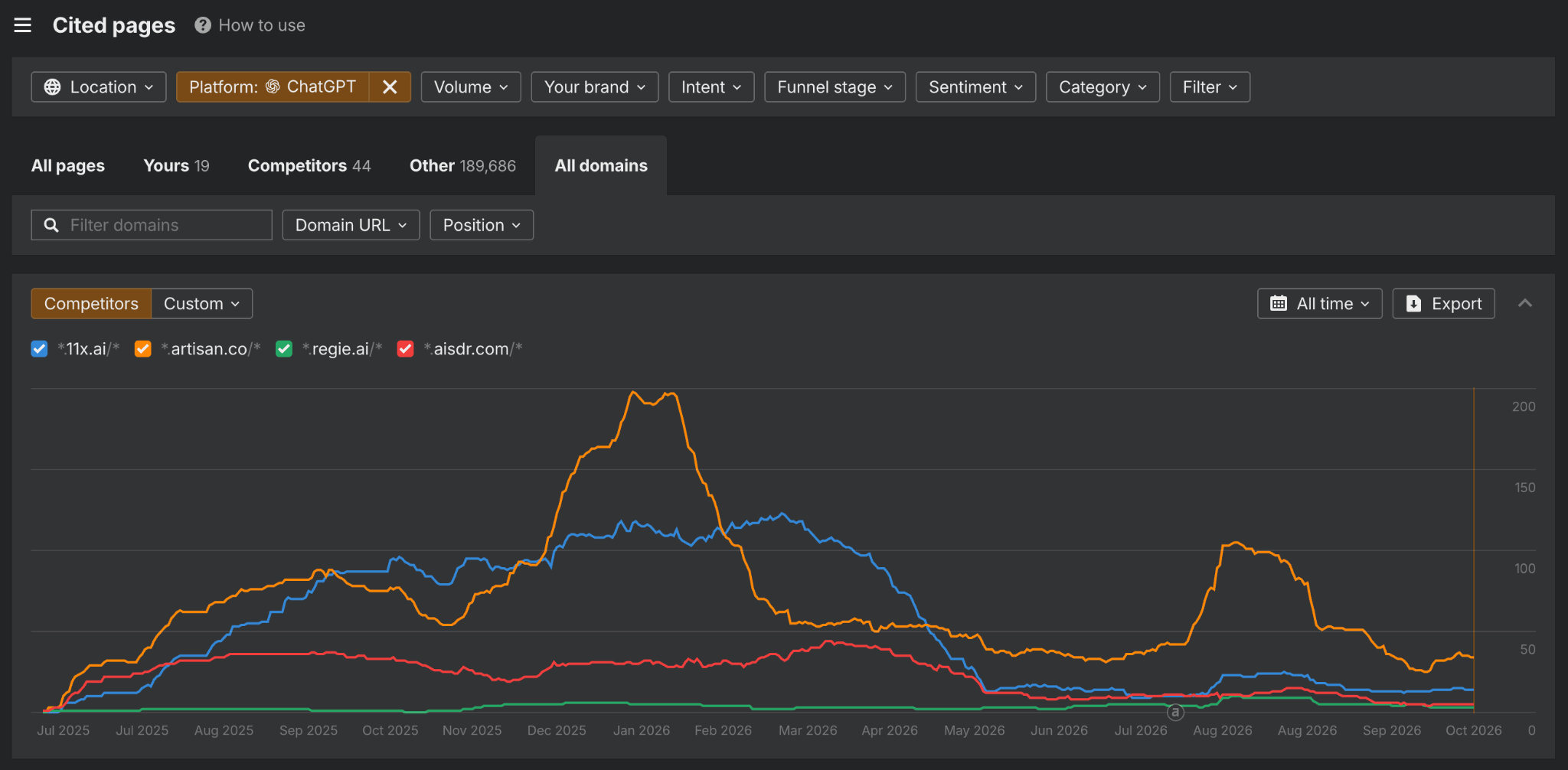
Most teams assume they need Forbes, TechRadar, or Product Hunt. When Josh looks at actual citations, they usually come from niche, high-quality publications with rich content. LLMs value high-value data more than press releases (aka domain authority).
Owners of these sites often don’t realize how well they’re cited, so you can actually ask them to feature you too. Sometimes placement is pay-to-play, but not always - you can go with a simple ask first
Step 4: Fight for the top 3
If a “top 10 AI SDRs” listicle doesn’t include you, getting added at number seven won’t move much. AirOps found that roughly 80% of brands mentioned through third-party content appeared within the first three positions of the cited page.
The goal isn’t simply to get included in a comparison. You want to be prominently and accurately positioned for the use cases where you can win.
Being ranked first for the wrong buyer is less valuable than being recommended for the right use case.
Step 5: Prioritize offsite opportunities
There is no universal rule for allocation across listicles, YouTube, creators and communities. The right mix depends on the category, buying question and AI engine.
Prioritize offsite opportunities based on five factors:
How commercially valuable the buying question is.
How often the source appears in relevant AI answers.
Whether competitors are present and the brand is missing.
Whether the source can credibly communicate the brand’s differentiation.
The cost, effort and likelihood of securing meaningful coverage.
AEO moving so fast is a double-edged sword - you can get cited fast, but you can also lose your spot overnight. Reddit lost a lot of its citation share when new models came out, and teams that spent a quarter building a Reddit strategy saw it go obsolete. So map each question theme to the places actually cited for it, and show up there with real answers (not AI-slop replies).
Once you’re showing up, the next question is whether it pays off.
Measure your AEO efforts
Visibility is the easiest to track metric. You can do it with a well-built prompt set in a tool like AirOps, Profound, Peec, Ahrefs Brand Radar, or Athena. But visibility is, at best, a directional metric. In Q4 2026, 61% of marketers must prove ROI to justify their AEO spend (Supermetrics, 2026).
Josh separates AEO measurement into five layers:
Source influence: Which external sources repeatedly appear in answers to commercially valuable questions, and where are competitors being represented?
Discovery: How often is the brand mentioned or included in an AI-generated shortlist for non-branded buying questions?
Preference: When buyers ask AI systems to recommend products, how often is the brand recommended relative to its competitors?
Accuracy: Are AI systems describing the company’s capabilities, integrations, pricing and positioning correctly?
Commercial impact: Are qualified pipeline, customer acquisition and revenue moving in a direction consistent with improvements in AI discovery and recommendation share? Where feasible, can controlled experiments establish incremental lift?
Josh also monitors LLM referrals, direct traffic and conversion behavior as supporting signals. But these are imperfect attribution mechanisms, not proof that AEO caused a particular business outcome.
That’s why direct traffic matters: Kevin Indig estimates about 70% of AI traffic is attributed to direct, and GA4 still has no AI channel grouping out of the box.
Best-in-class teams treat AEO as a part of their organic strategy - a channel, not one-off campaigns or a set of unrelated experiments. The moment you take your foot off the gas, a competitor takes your spot.
Wow, we covered a lot this week - thanks, Josh, for your awesome insights - and thank YOU for reading! 💜
If you do one thing this week, do this: pull the citations for your top five buying prompts and look at where they come from. Count how many are on your domain versus someone else’s. That ratio will tell you more about your AEO strategy than any visibility dashboard. Then pick the captain of your tiger team. 🐯
And if you’re serious about AEO, Josh just published his Definitive 2027 Guide to AEO. It’s free and not gated, from a top expert in the field, and it includes a 90-day plan you can start with right away. It’s long, but packed with value.
Until next time,
Maja
Kevin Indig's 70% estimate means GA4 files most AI traffic under direct. A cheap fix is a required "Where did you first hear about us?" field on the demo form, with "ChatGPT or another AI" as an option. The answers won't be exact, but after a quarter you can match those deals to the citation work and see if pipeline moved.