


👋 Welcome to another weekly edition of the GTM Strategist newsletter - stay until the end for the latest GTM news and new job posts!
Presenting partner: Viktor
Viktor is an AI employee that lives in Slack and Microsoft Teams. Connects to 9,800+ tools. Does the work, not just answers questions. Hire Viktor for your team.

GTM partners:

Ahrefs Brand Radar - Make AI recommend your brand.
Clay - Build systems to grow revenue.
FullEnrich - 80+% find rate for emails and phone numbers.
HubSpot for Startups - The GTM engine that grows with you. See if you qualify for 90% off.
Miro - The collaborative workspace where GTM teams and agents converge to build together.
Ploy - The marketing platform that turns your website into a growth engine.
Primer - Target your ICP across LinkedIn, Meta, Google, Reddit, and more.
Dear GTM Strategist!
How long does your team need to ship one new webpage?
I’m embarrassed to say that it used to take me 14 days of back-and-forth with designers/web developers or clunky MCPs to get anything done. After we added up all the receipts, a landing page cost about $1500. And I think that is very little compared to $5-20K quotes we were getting from some agencies and freelancers. No wonder I roll my eyes and hold my wallet every time someone mentions website redesign or some fancy experimentation. 🙄
For 20 years, most of us treated the website as a necessary evil and didn’t fix what wasn’t broken. Unless conversions plummeted or a huge rebrand was on the horizon, we drove traffic to our storefront and worked hard to service the leads that landed in our CRM or inbox. OK - maybe we ran an A/B test now and then, just not to feel guilty that we are not doing anything on the website.
Then suddenly, everybody I know started to ship websites. Most of them were token-hungry monstrosities that aged into zombies. Claude has taken website production costs to almost zero in 2026; the symptom of this “vibe web coding and designing” is that everything looks the same and doesn’t convert. Oh - and the copy is as cringe as it gets. “One app. One choice.”
The BIG question I want to tackle with you today is: how to make high-converting web assets that don’t require 5 freelancers, $25,000, 3 weeks, and 7 tools to get a website up and running 🤯. And I did not have to look very far …
My friends Alex Lindahl, Creator at Clay, and Davide Grieco, Head of Growth at Clay, were shipping new web assets week after week this fall - and these were not half-broken landing pages that looked like WordPress templates from 2017.
No, they were beautiful lead gen machines that converted like crazy.
They pointed me to Ploy, which is probably one of my favorite tools I discovered in Q4 2026 - as soon as I opened their website with a tagline, “Your website should be working harder than you,” I was like, “shut up and take my money.”
Especially because it offers a FREE version to start playing with, and there are plenty of useful templates to start with.
$27 million seed round for what some would describe as a “red ocean”
Before he co-founded Ploy, Bryant Chou was co-founder and CTO of $4B website company Webflow, where he was heavily involved in marketing and growth too. As an engineer, he wanted marketing that was both scientific and creative. His motto was simple: “let’s just try.” He started using Webflow’s own product to build marketing assets.
When Webflow moved into enterprise sales, Bryant wanted to keep building for the self-serve, experimental side of growth. In his view, here’s how any 2027-ready website should do:
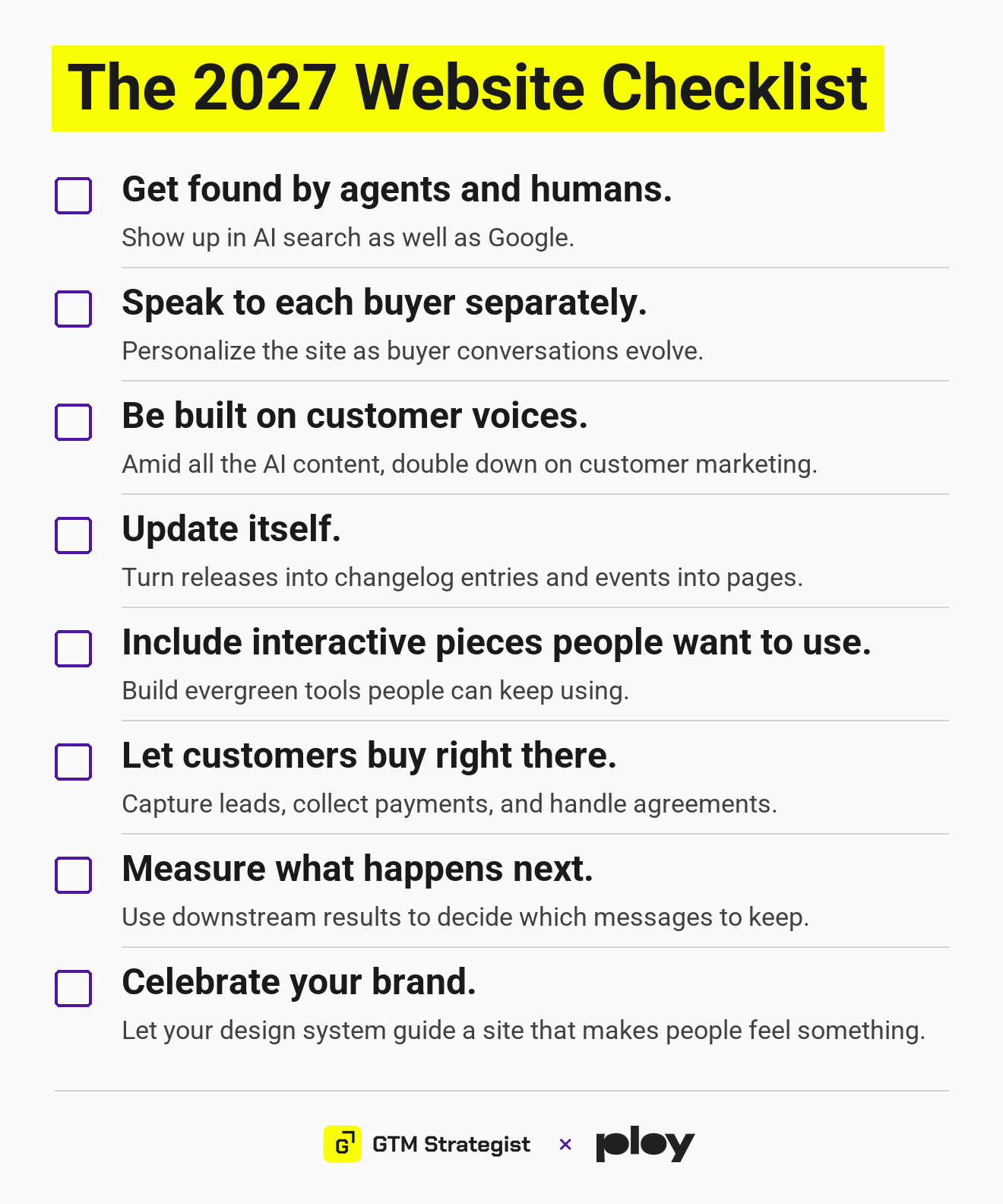
Early adopters in GTM and beyond went bananas on this value prop 🍌.
Ploy was voted one of the must-have tools in the State of B2B GTM survey we did with Kyle Poyar.
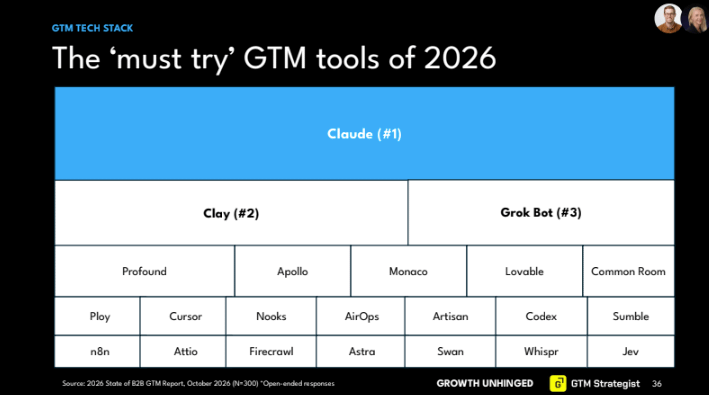
And Ploy has secured a $27 million seed round led by First Round Capital and Y Combinator.
So, how are best-in-class GTM and growth teams building a new generation of websites based on these principles?
I partnered with Ploy for this post to share best practices.
1. Clay’s Growth Team: Mini DIY apps are now generating thousands of new leads
Instead of launching good old marketing campaigns (download PDF like it is 2008 📥) and generic sales landing pages, Clay is using what Gabriel Weinberg and Justin Mares named “Engineering as Marketing” in their book Traction.
The idea is to create interactive experiences that add value for users, resulting in conversion rates higher than any normal marketing campaign would generate and building strong brand legacies. Oh, you’ve seen it before. Probably the most epic example is Website Grader by HubSpot.
Clay’s growth team has five people and no dedicated design or dev support. Instead of waiting for internal resources, they started building small, focused web assets themselves with an AI site builder (Ploy). The goal was simple: get a signal on what works as fast as possible.
Here is what they shipped:
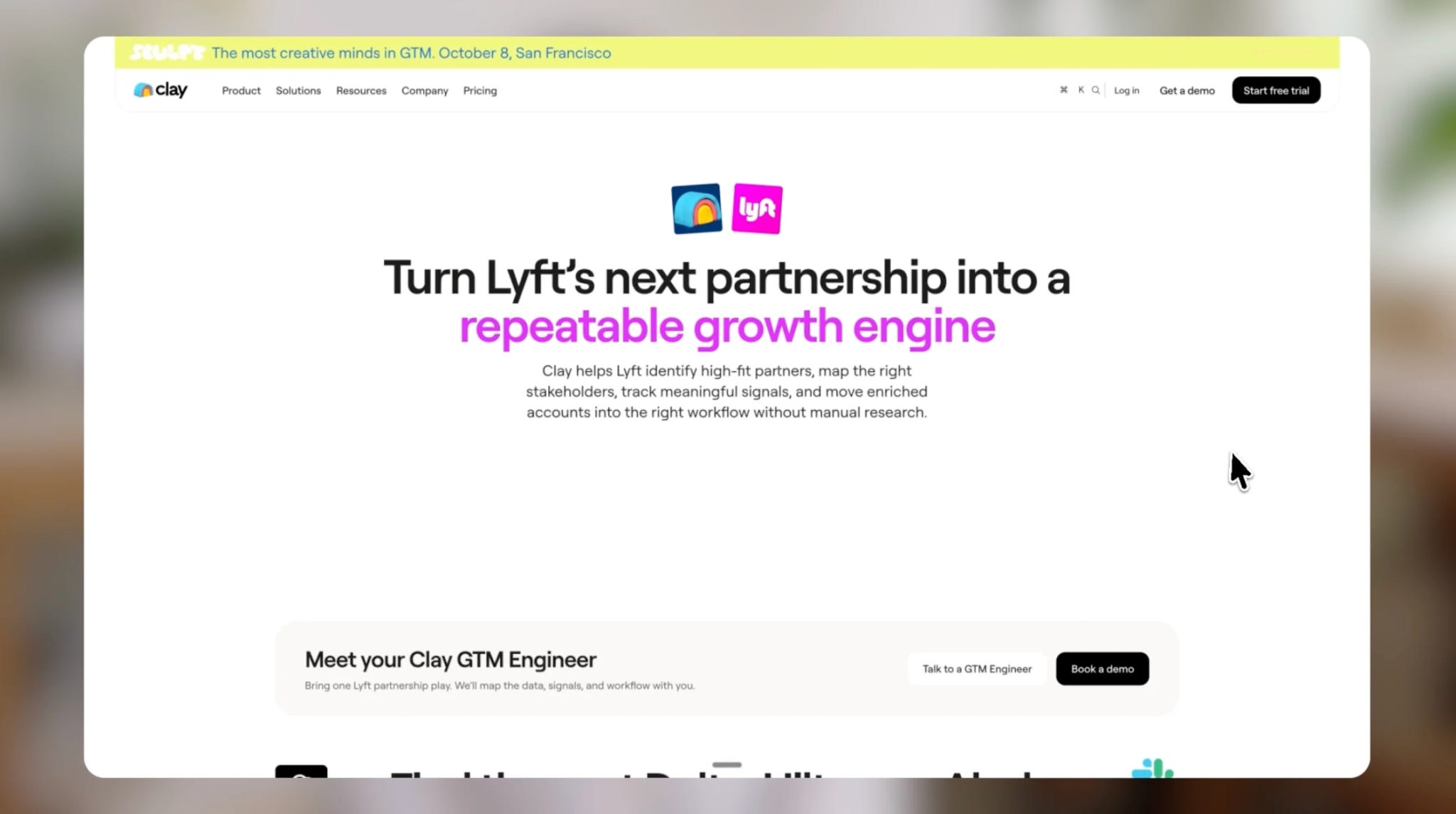
1. ABM pages at enterprise scale. Custom landing pages for more than 100 enterprise accounts. Creating a new page or making edits went from days to about 2 hours. That means the team can act on sales feedback the same day, cover more of their TAM, and run separate experiences for mid-market and enterprise buyers.
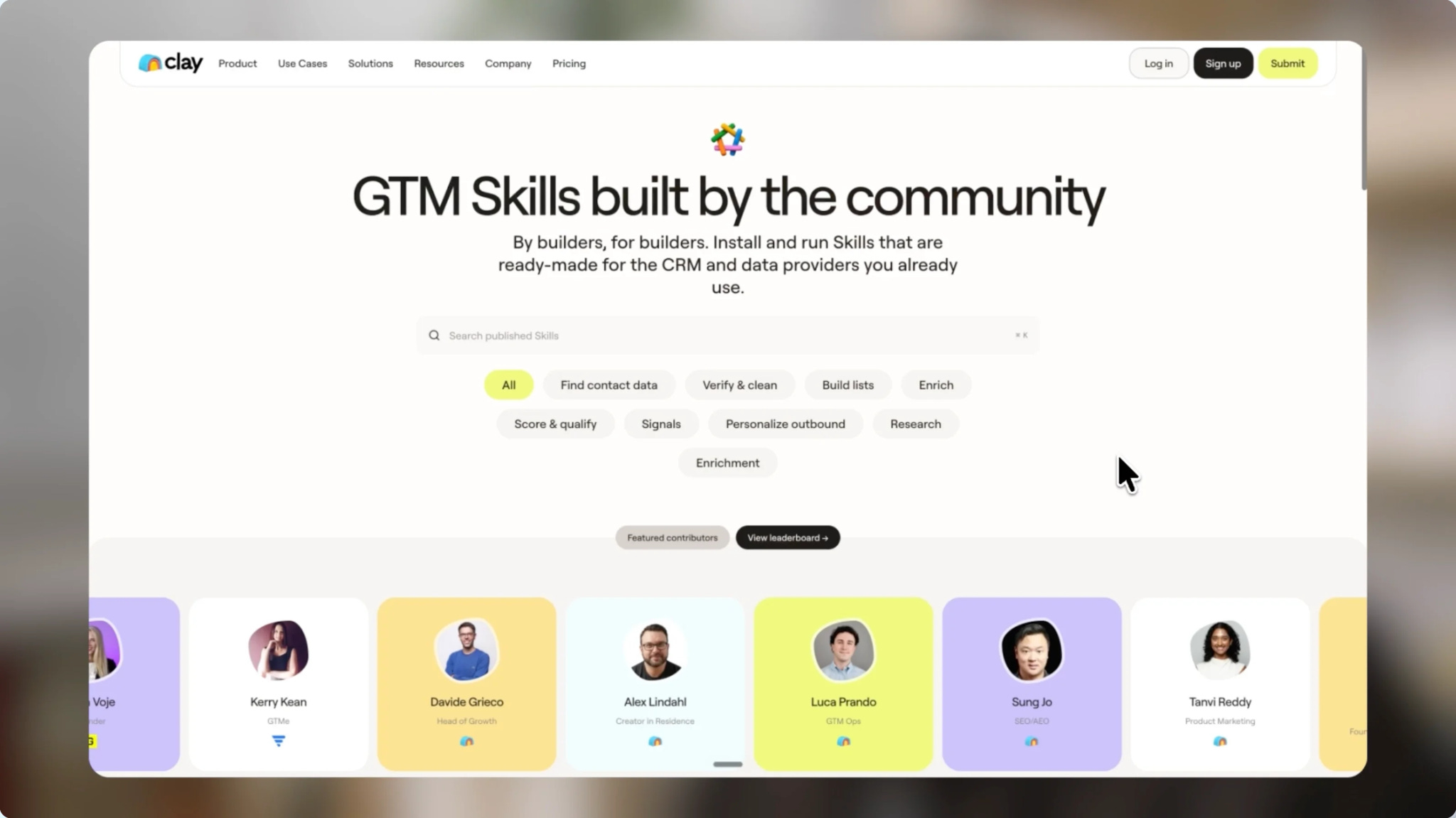
2. A Skills Marketplace that works as an SEO and AEO play. It now holds 40+ templated workflows from Clay’s power users. It turns customers into advocates and ranks for high-intent searches like “ICP outbound campaign.” Sung Jo, Clay’s PLG lead, estimated a project like this would have taken about six months with engineering, product, and design. They shipped it in about a month.
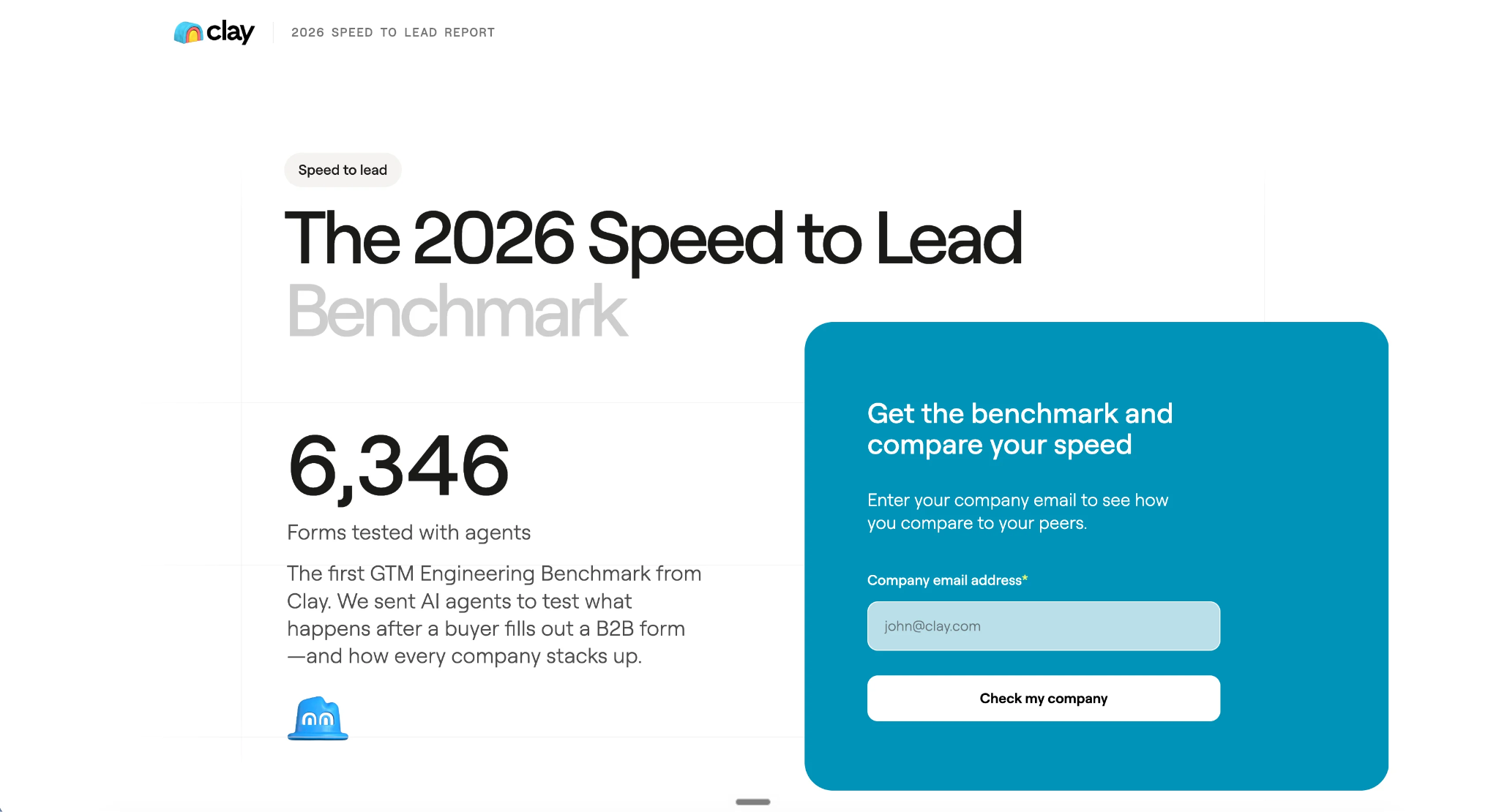
3. Lead magnets turned into mini-apps. Instead of another gated PDF, Alex Lindahl built the Speed to Lead Benchmark. It answers a question every Head of Sales has: how fast do my SDRs actually follow up on a relevant lead? He took it from idea to working prototype in days.
What I find most interesting is the operating model. When one person can own an asset from idea to launch, the bottleneck becomes your ideas, not your ability to execute them. And that matters, because most experiments fail.
“To be good at your job, you need to try a lot of things. And a lot of things are not going to work.” - Davide Grieco, Head of Growth at Clay
2. Hex: Challenge accepted: Pump out 100+ ABM pages
Hex, the AI analytics platform, is used by more than 2,000 companies, including Anthropic, Ramp and Cursor. Its product moves fast: this year alone, Hex launched Context Studio for managing analytics agents, added web search to the Hex Agent and shipped a plugin for OpenAI’s Codex. Every launch means new pages, new ads and new messages for the growth team. And according to Peter Ryan, head of growth marketing, speed and brand standards “had historically been competing forces.”
Here is how the team handles it:
Account data in, a custom page out. Hex already used Clay to track each target account’s industry, tech stack and likely problems. They connected that data to Ploy and started getting on-brand pages within an hour of signing in. Dorothy Huynh, GTM engineer, then built workflows that research each account and build its custom page.
A “subset of the brand,” not a copy. Account pages don’t recreate every detail of Hex’s homepage. Each one is designed to feel like Hex, and richer sections, such as one on self-serve, are reused from the main site when an account needs them. Adam Storr, head of design, was initially unsure the brand could be matched. He now builds the pages himself.
The same design system for ads and pages. An ad and the page it links to share the same font, colors and message.
Sales uses the pages. Account reps put the ABM pages in their own outreach and send feedback. Working versions come back within days, while the feedback is still fresh.
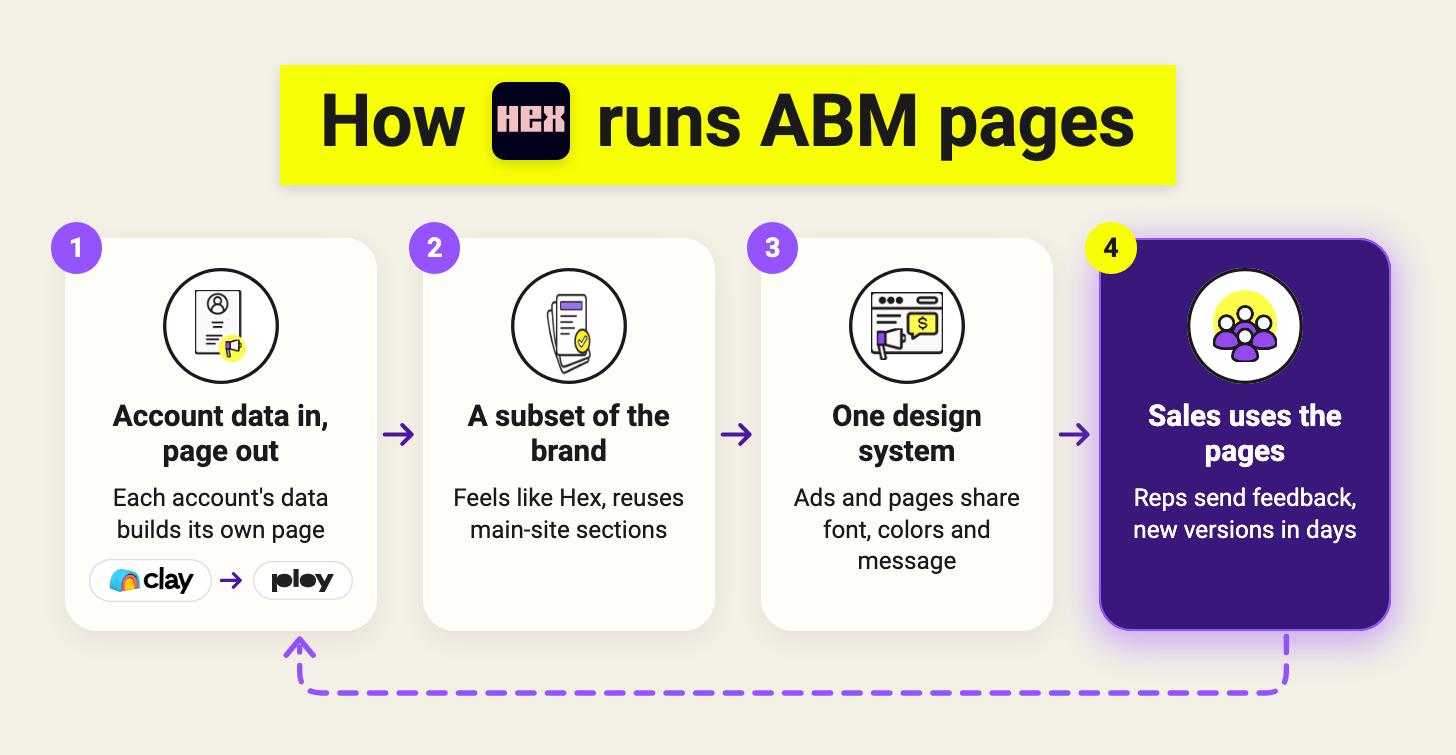
ABM pages are usually treated as a marketing deliverable. At Hex, they became a shared asset, and fast iteration is what made sales trust them.
“Our ability to absorb that feedback, implement it quickly, show that person that we’re improving, goes a long way to bringing us as a marketing team closer to our sales team.” - Peter Ryan, head of growth marketing at Hex
3. AEO out of the box: How our report with Kyle got AI traffic in less than a week
Kyle Poyar and I needed a home for the State of B2B GTM report, fast. It was a new domain, and neither of us can code properly or has time to deal with hours of prompting. We built it on Ploy in a couple of hours using only voice prompts.
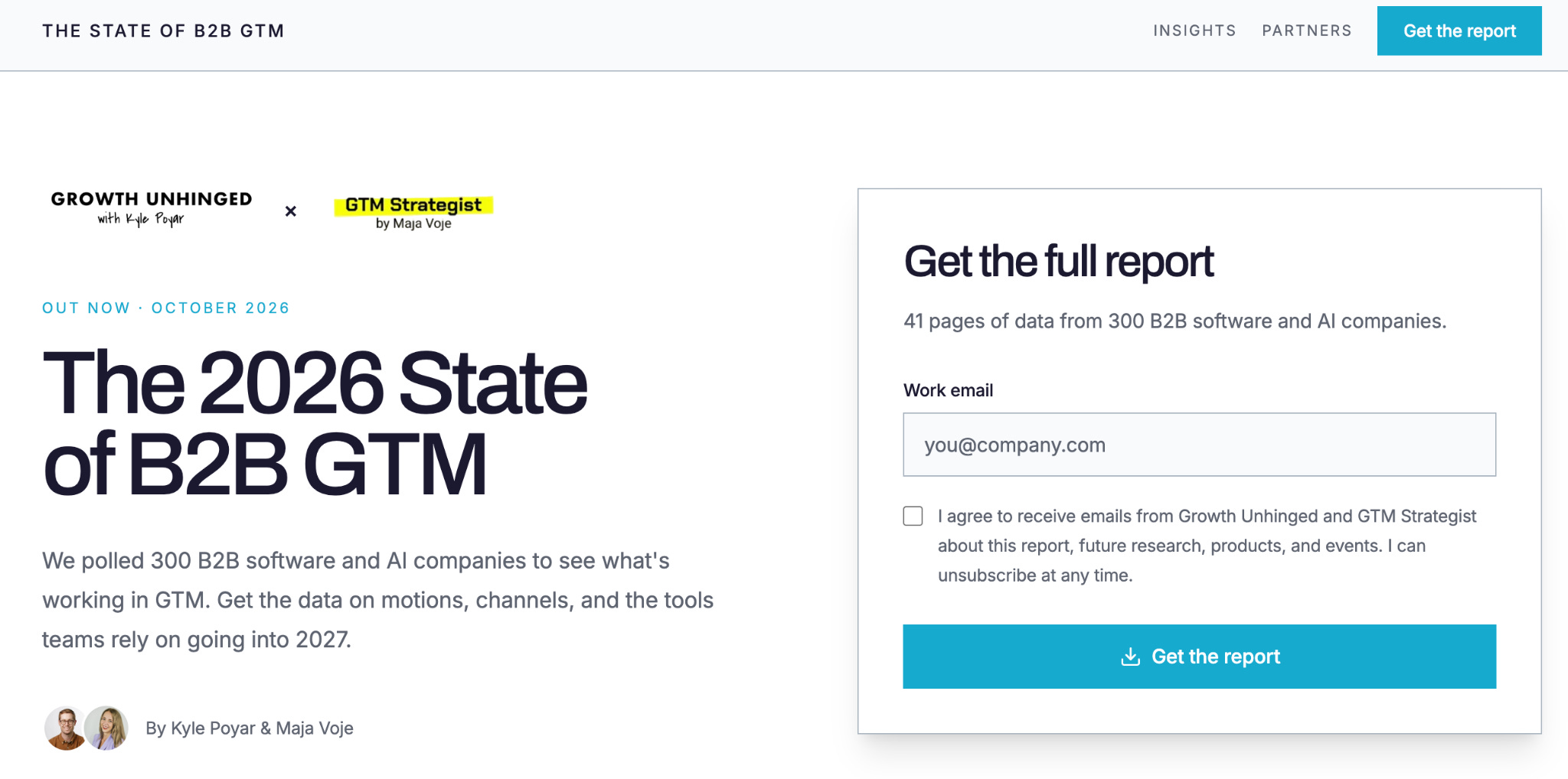
I didn’t know exactly what I was doing - we were in an extreme rush to launch. I was just like, “Yes - enable enrichment; sure, why not AEO too.” Well, we were busy wrapping up the report and preparing all the marketing materials - some things worked surprisingly well.
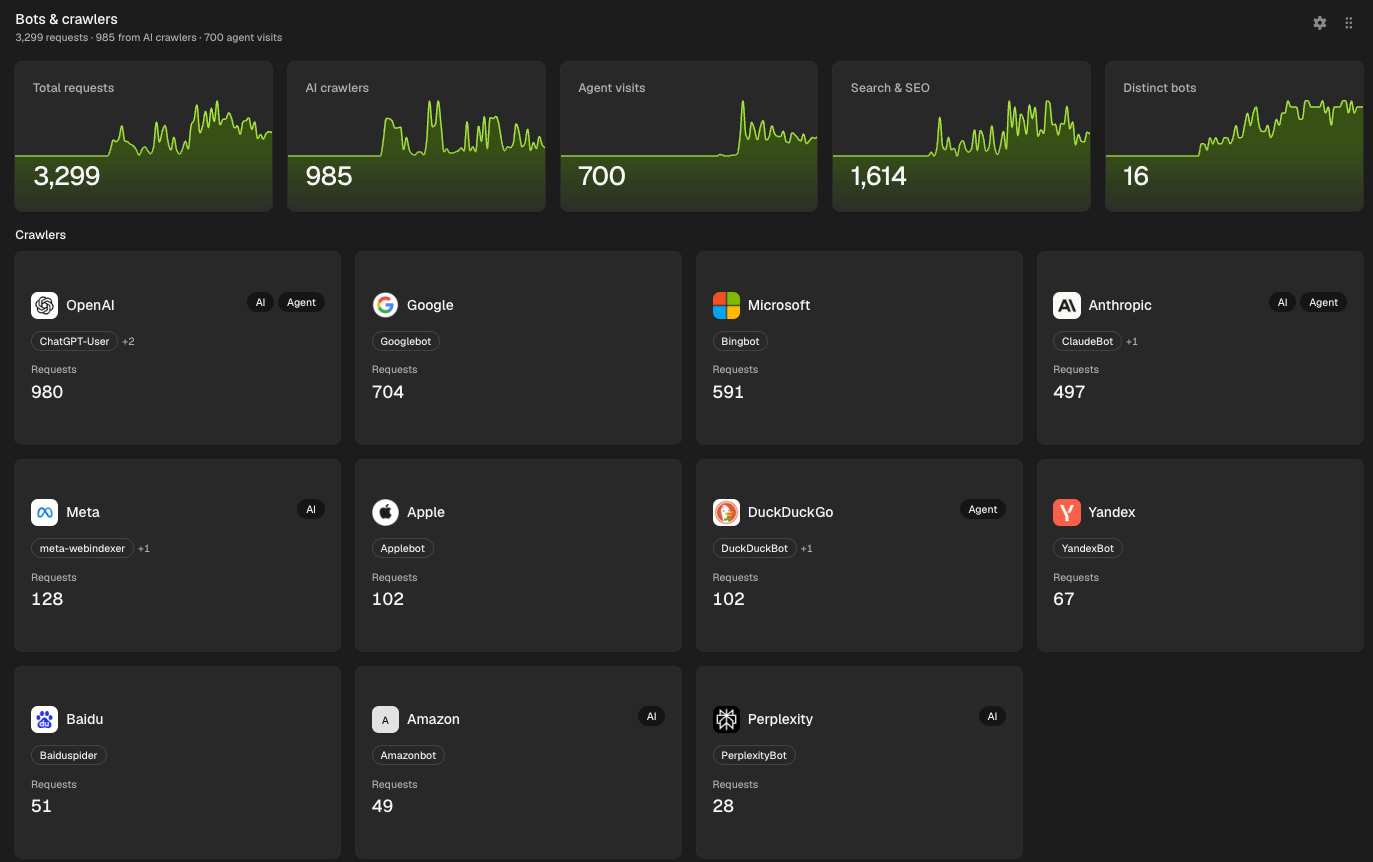
Based on the analysis of 10,000+ page views by 6,244 visitors, the web page was apparently automatically indexed on AI search engines.
What made me super happy is that we could automatically see which companies are showing the most interest in the website.
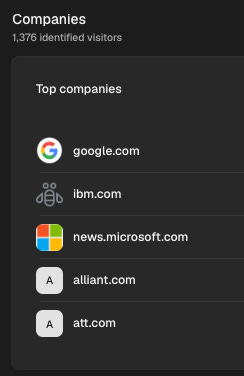

That’s an amazing insight for prospecting for 2027. Finally, some analytics that I understand and care about.
Plus, all the standard metrics to help you understand your funnel:

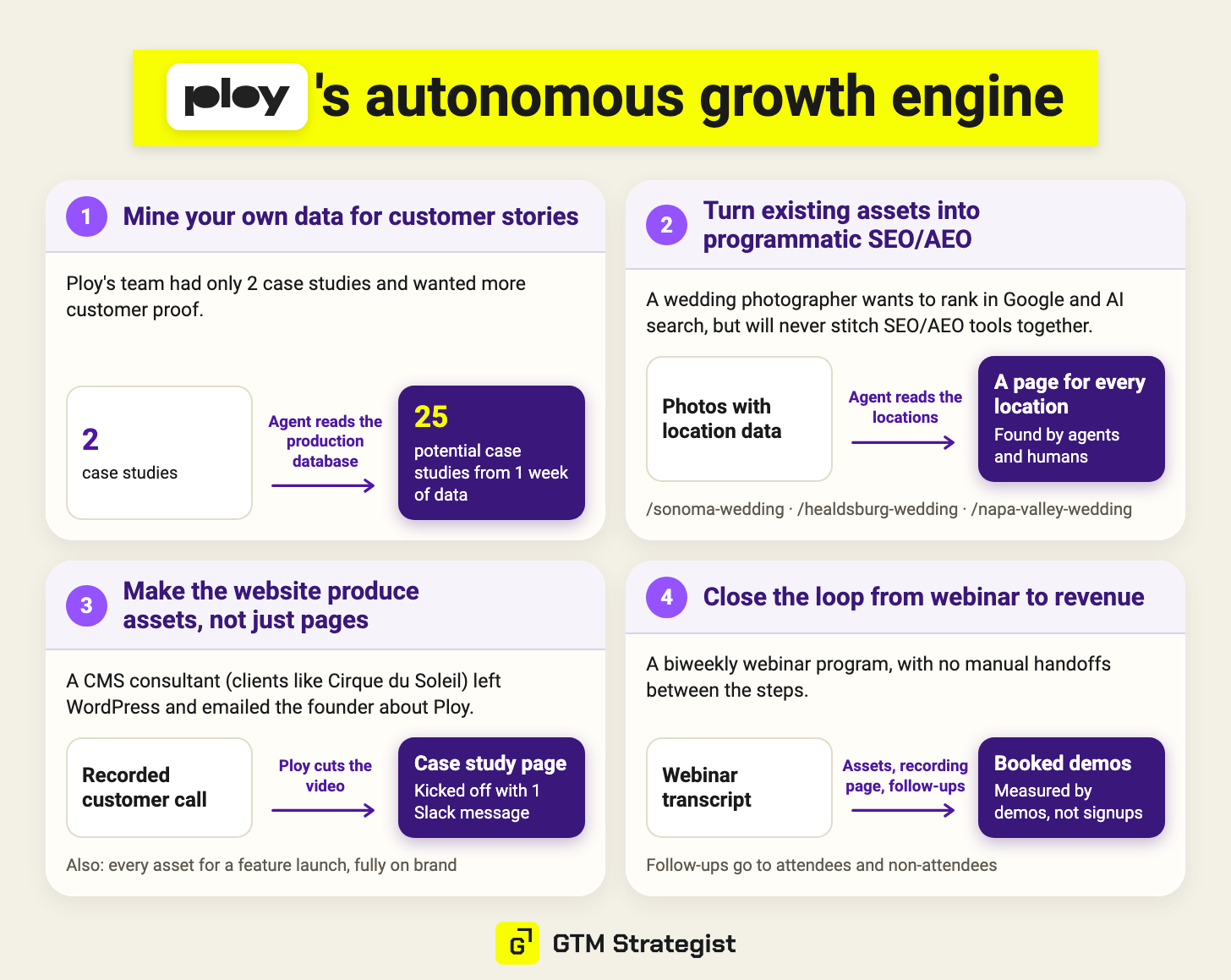
4. Ploy’s autonomous growth engine
Naturally, Ploy uses Ploy to grow Ploy. Dogfooding 101 :) And what I like most is that the team shares these experiments publicly, so you can copy them.
Mine your own data for customer stories. Bryant gave Ploy’s agent read-only access to Ploy’s production database. It found the most interesting things customers were building and drafted case studies from them. From one week of data, the team went from 2 case studies to 25 potential ones. Some of the use cases surprised even them. An AI medical concierge built an intake process that categorizes leads with AI. Another company connected flight bookings to HubSpot for lead routing, then built lookalike audiences on Meta ads.
Turn existing assets into programmatic SEO. These opportunities are often already sitting in your own assets. Bryant told me about a wedding photographer who moved his site to Ploy. He wants to rank in Google and AI search, but he will never stitch together SEO tools himself. His photos already carry location data, so the agent has built a dedicated page for every location he shoots (Sonoma, Healdsburg and Napa Valley) - to help him get found by agents and humans. That is built-in SEO/AEO that also works for founders without a specialized growth team.
Make the website produce assets, not just pages. Eliana Atia, Ploy’s founding marketer, said something every solo marketer will recognize. Going from idea to project plan now takes minutes: you talk your thoughts into a tool and get a beautiful plan back. The hard part is still the assets, meaning social copy that sounds good and a banner that doesn’t look like AI made it. That’s why she believes the 2027 website should create launch graphics, ad creative, and videos too. Some examples from Ploy:
Feature launches: Eliana is running a launch where Ploy creates every asset, fully on brand.
Case study videos: A long-time CMS consultant who builds sites for clients like Cirque du Soleil moved off WordPress. He emailed Bryant to say the product was doing the talking. Bryant booked a call and recorded it. Ploy then pulled the recording, cut the video and built a case study page. Bryant kicked it all off with one message in Slack.
Close the loop from webinar to revenue. The gap between “we ran a webinar” and “the webinar made money” is usually five manual handoffs long. Eliana’s biweekly webinar program closes it with one loop:
Webinar transcript goes in
Ploy designs the assets from a template
It publishes a page for the recording
It drafts follow-ups for attendees and non-attendees
Follow-ups turn into booked demos
Lesson 1: Kill the handoffs. Eliana’s rule: if you still have to connect the pieces yourself, ask whether the workflow saves you time at all. The work breaks at the handoffs, and only loops that feed themselves pay off.
Lesson 2: Point it at the right metric. By PLG metrics like signups and impressions, the webinars would look like wasted effort. Filter by demos booked from webinar leads, and the ARR story looks very different. A website that optimizes itself is only as good as the metric you point it at. The same goes for the A/B tests Ploy runs on its own pages.
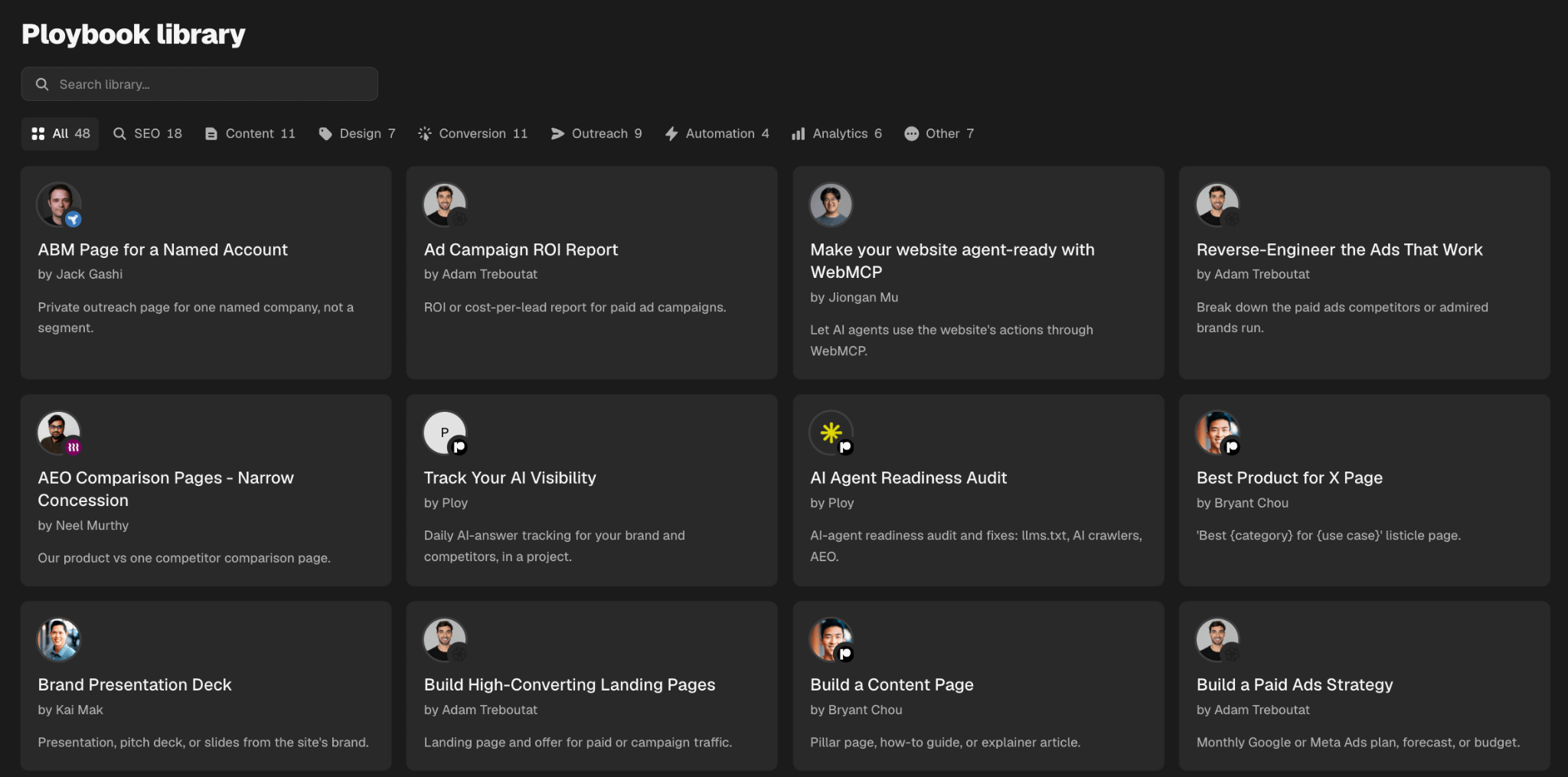
Want to run these plays yourself?
Ploy published dozens of public “ploybooks” from top experts that you can run as they are.
Taste Is the New Moat
Won’t this flood the internet with even more generic AI content? It will, unless your rules are built in.
One top-100 web publisher has zero tolerance for AI-generated photos and low-quality AI content. What makes AI work for them is a knowledge base, a design system and memory. Tell it once to never use em dashes, and the rule holds.
The old editorial rules still apply, too. We all fall in love with our AI creations. If you made and launched something in an hour, sleep on it and look again with fresh eyes before you launch.
And then there’s taste. If you don’t know what good looks like, the first AI draft will always look fine, because it beats what you would have made yourself.
Try this: Write down your 10 non-negotiables, like banned words, visual rules and tone. If a tool can’t hold them, it will create more cleanup than it saves.
Finally, stop rebuilding your context for every new tool. Split it in two:
Preferences are yours. Your structure, your standards, your list of what sounds like AI. Keep them in your own library and update them as you build.
Context belongs to the company. ICP, messaging, data. Each new tool plugs into it.
My challenge for you in 2027: find the job on your website with the most manual work behind it today, and start there.
If you want to see what this looks like in practice, try Ploy.

My hand-picked selection of the latest news, data you shouldn’t miss, and job posts.
OpenAI launched Businesses in ChatGPT in beta. Companies can claim their business in Business Hub, add product feeds with pricing, and see how often ChatGPT mentions them and sends them clicks. Eligible U.S. ecommerce and online service businesses can also launch a Business Agent that answers buyers’ questions, and sponsor it as the landing spot for ChatGPT Ads.
Rox raised a $100M Series B at a $1.3B valuation, co-led by General Catalyst and March Capital. Its revenue agents qualify leads and book meetings for Global 2000 companies, and it says ARR grew more than tenfold.
AI is now the top budget priority for B2B marketers. In B2BMX Insights’ 2026 Benchmark Report, 60.4% are increasing budget for AI tools. In 2025, account-based marketing led the list at 44.7%.
GTM roles worth a look
Head of Growth Marketing at FullEnrich. San Francisco Bay Area. Own paid, organic, AI discovery and website conversion, with paid spend growing toward $1M+.
Campaign & Launches Lead at FullEnrich. San Francisco Bay Area. Own the campaign and launch calendars, and design the offers behind each campaign.
Head of Demand Generation at n8n. Remote in the EU, UK or US. Turn n8n’s 650,000+ builder community into Mid-Market and Enterprise pipeline.
Growth Manager, GEO / AEO at Supabase. Remote in the Americas. Get Supabase recommended when builders ask ChatGPT or Claude for a backend.
Field Marketing Manager, Europe at Linear. Remote in Europe, London preferred. Be Linear’s first field marketer in Europe.
Until next week,
Maja
The Hex feedback loop is the bit reps can use tomorrow: send marketing the exact buyer objection, then ask for a page that answers it. A logo swap alone gives the buyer no reason to care.